 By
By A hantavirus outbreak aboard a remote expedition cruise ship has killed three people, left one in intensive care, and triggered an urgent international health response. The World Health Organization confirmed on Tuesday that human-to-human transmission cannot be ruled out — a development that raises the stakes for the roughly 150 passengers still stranded off the West African coast.
What Happened on the MV Hondius
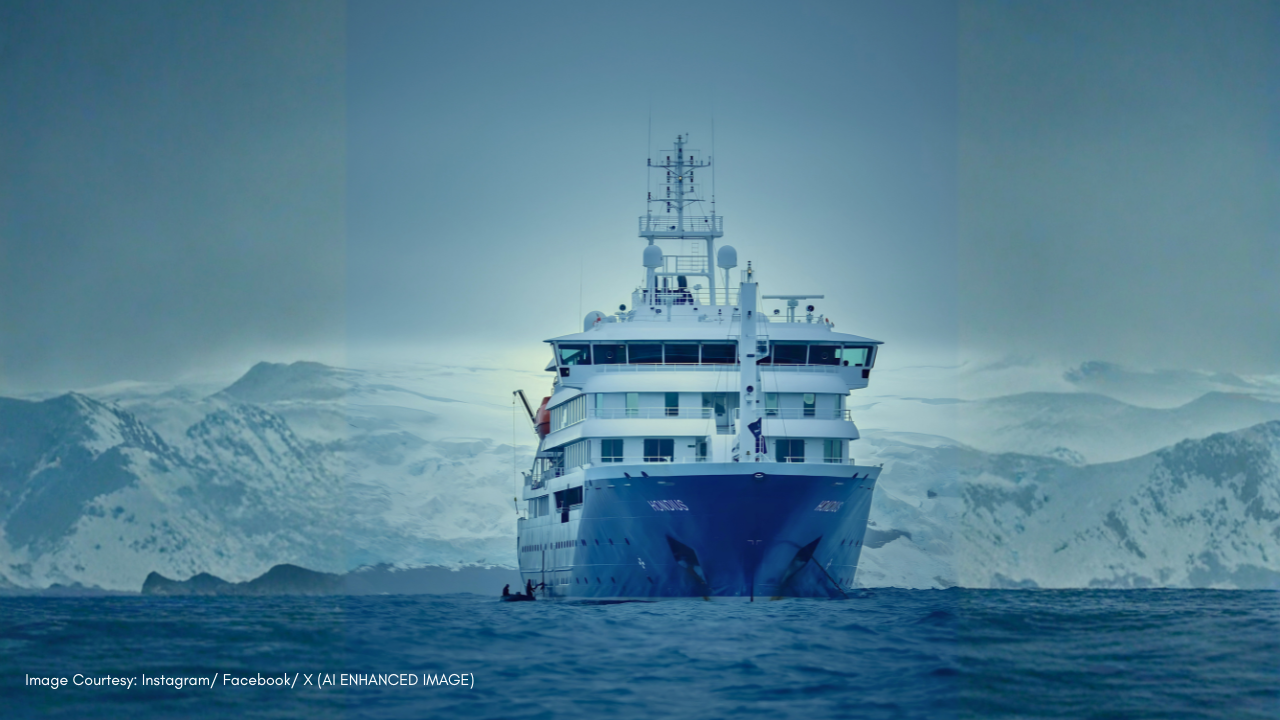
The MV Hondius, an expedition cruise ship operated by Oceanwide Expeditions, departed Ushuaia, Argentina, last month on a transatlantic voyage to some of the world’s most isolated islands. The itinerary was designed for adventure — remote stops, rugged terrain, wildlife encounters in areas far from routine medical infrastructure.
But somewhere along that route, passengers began falling seriously ill with a rapidly progressing respiratory illness. The ship is now anchored off the coast of Praia, Cape Verde, effectively stranded while health authorities manage the unfolding crisis.
Seven cases of hantavirus have been identified so far. Two are confirmed; five remain suspected. Medical evacuations are underway for those still symptomatic on board.
WHO Sounds the Alarm on Human-to-Human Transmission
The World Health Organization raised a serious flag on Tuesday when Dr. Maria Van Kerkhove, WHO’s Director for Epidemic and Pandemic Preparedness and Prevention, told reporters that some passengers had been in very close contact with one another before falling ill.
“We do know that some of the cases had very close contact with each other and certainly human-to-human transmission can’t be ruled out,” Van Kerkhove said. “So as a precaution, this is what we are assuming.”
That statement carries weight. Hantavirus has historically been considered difficult to transmit between people. The possibility of person-to-person spread — even as a precautionary assumption — marks a significant shift in how this outbreak is being handled.
Van Kerkhove was careful to add context. “The risk to the general public is low,” she emphasized. “This is not a virus that spreads like flu or like COVID. It’s quite different.”
Still, WHO’s cautious framing signals that scientists are not treating this as a standard hantavirus case. The confined environment of a cruise ship amplifies exposure risk in ways that a land-based outbreak would not.
View this post on Instagram
Who Are the Victims?
Three people have died from the hantavirus outbreak so far. The deceased include a Dutch couple and a German national — all passengers on the MV Hondius.
One British national remains in intensive care at a hospital in South Africa. Van Kerkhove noted on Tuesday that his condition is improving. Two additional passengers still on board the ship are exhibiting hantavirus symptoms, and their medical evacuation is currently in progress.
Among those still stranded on the vessel are approximately 17 American citizens. In total, close to 150 passengers and crew remain on board, awaiting resolution of the health emergency.
What Is Hantavirus? Background and History
Hantavirus is a rare but potentially fatal illness caused by exposure to infected rodents. The virus spreads primarily through contact with rodent urine, faeces, or saliva — not through casual person-to-person contact under typical circumstances.
The disease gained global attention in the early 1990s when a cluster of unexplained deaths in the American Southwest led to the identification of Sin Nombre virus, a strain of hantavirus carried by deer mice. That outbreak killed more than a third of those infected.
Two main disease forms are associated with hantavirus. In the Americas, Hantavirus Pulmonary Syndrome (HPS) causes severe respiratory distress and has a fatality rate that can exceed 30%. In Europe and Asia, Hemorrhagic Fever with Renal Syndrome (HFRS) is more common and affects the kidneys.
Both forms begin with flu-like symptoms — fever, muscle aches, fatigue — before escalating rapidly. The progression from early symptoms to acute respiratory or renal failure can happen within days. There is no specific antiviral treatment approved for hantavirus; supportive care in intensive settings is the standard response.
Documented cases of human-to-human transmission of hantavirus are extremely rare globally. One notable exception involves the Andes virus strain, found in South America, which has been linked to limited person-to-person spread in specific documented outbreaks. The route taken by the MV Hondius — originating from southern Argentina and crossing the Atlantic — makes the Andes strain a relevant variable that investigators are likely examining closely.
Why a Cruise Ship Makes This Unusual
Hantavirus outbreaks linked to cruise ships are virtually unheard of in modern medical literature. That is what makes this case medically significant beyond the immediate tragedy.
Cruise ships are enclosed environments with shared ventilation systems, communal dining areas, and dense population in a confined space. For a disease usually transmitted through rodent contact in rural or semi-rural settings, the shipboard environment raises immediate questions: Where did passengers encounter an infected source? Were there rodents aboard? And how did multiple cases emerge in such close geographic and temporal proximity?
Public health officials have not publicly confirmed the exact transmission pathway. However, the voyage route — passing through remote island locations in the South Atlantic before heading toward Africa — would have placed passengers in areas where rodent-borne pathogens are not uncommon.
The management of a hantavirus outbreak at sea adds layers of difficulty: limited onboard medical capacity, delays in laboratory confirmation, and the logistical challenge of evacuating critically ill patients from a vessel in open or coastal waters.
What This Means: The Broader Public Health Picture
This outbreak carries implications well beyond the MV Hondius.
First, it puts a spotlight on health screening and rodent control protocols aboard expedition vessels operating in remote regions. Oceanwide Expeditions runs voyages to Antarctica, the Arctic, and other isolated destinations — routes that carry passengers into environments where zoonotic disease exposure is a real, if rare, possibility.
Second, the WHO’s precautionary assumption of human-to-human transmission — even before confirmation — reflects a post-pandemic shift in how global health authorities approach novel outbreak patterns. The default is now caution rather than wait-and-see.
Third, the international makeup of the victims and the stranded passengers — Dutch, German, British, American — means multiple governments are now involved in the response. That adds coordination complexity to an already difficult situation.
For travellers, the immediate takeaway is not panic. Van Kerkhove’s “low risk to the general public” assessment remains the WHO’s official position. But for those planning expedition voyages to remote areas, this event will likely prompt hard questions about what health safeguards exist when the nearest hospital is thousands of miles away.
Frequently Asked Questions
Q: What is the current status of the hantavirus outbreak on the cruise ship? A: As of May 5, 2026, seven cases have been identified — two confirmed and five suspected. Three passengers have died, one remains in ICU in South Africa with improving condition, and two others are being medically evacuated from the MV Hondius, which is anchored off Praia, Cape Verde.
Q: Can hantavirus spread from person to person? A: Typically, hantavirus does not spread easily between humans. However, WHO is treating this outbreak with the precautionary assumption that human-to-human transmission may have occurred, based on the close contact between some of the affected passengers. The Andes strain in South America is one variant known to show limited person-to-person spread.
Q: Is the public at risk from this hantavirus outbreak? A: WHO’s Dr. Maria Van Kerkhove stated clearly that the risk to the general public remains low. Hantavirus does not spread through the air like influenza or COVID-19. The outbreak appears contained to individuals aboard the MV Hondius and those in close contact with confirmed cases.
Q: How is hantavirus treated? A: There is no approved antiviral medication specifically for hantavirus infection. Patients are typically treated with intensive supportive care — oxygen therapy, fluid management, and in severe cases, mechanical ventilation. Early hospitalisation significantly improves survival odds.
Q: What happens to the passengers still on the cruise ship? A: Roughly 150 passengers and crew, including 17 Americans, remain on board the MV Hondius off the coast of Cape Verde. Medical evacuations are in progress for symptomatic individuals. Health authorities and the ship operator, Oceanwide Expeditions, are coordinating with local and international health agencies.
The hantavirus outbreak aboard the MV Hondius has turned an expedition voyage into a public health emergency, claiming three lives and stranding nearly 150 people off the West African coast. WHO’s decision to assume possible human-to-human transmission — even as a precaution — reflects the seriousness with which global health authorities are treating this unusual case.
For now, the immediate focus remains on evacuating the sick and monitoring those still on board. But as investigators work to trace the source of the outbreak, the findings could reshape health protocols for expedition cruises operating in some of the world’s most remote environments.
Stay informed on global health alerts and outbreak news — bookmark Global Report Online for real-time updates as this story develops.