 By
By Iran has threatened to shut the Strait of Hormuz again — just hours after reopening it — as the US blockade of Iranian ports shows no sign of ending. The warning, issued on Saturday, April 18, 2026, signals how quickly fragile diplomatic progress can unravel in one of the world’s most volatile flashpoints.
The waterway, through which roughly one-fifth of global crude oil and liquefied natural gas passes, sits at the center of a high-stakes geopolitical chess match between Tehran and Washington.
Is the Strait of Hormuz and Why Does It Matter?
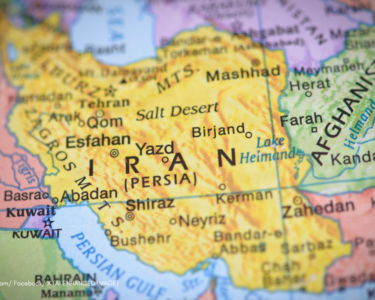
The Strait of Hormuz is a narrow waterway located between Iran to the north and Oman and the United Arab Emirates to the south. At its narrowest point, it is only about 33 kilometers wide.
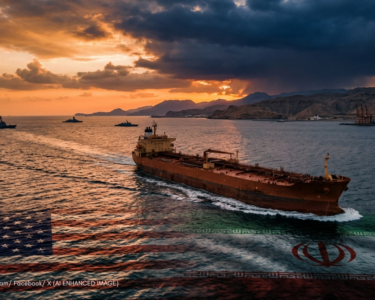
Despite its small size, it carries an outsized role in the global economy. Approximately 20 percent of the world’s oil supply — along with significant volumes of liquefied natural gas — flows through this chokepoint daily.
Any disruption to transit through the Strait of Hormuz sends immediate shockwaves through global energy markets. Closure, even for a short period, has historically triggered sharp spikes in oil prices and economic uncertainty worldwide.
Iran’s Warning: Close It Again If the Blockade Continues
On Saturday, Iran’s parliamentary speaker Mohammad Bagher Ghalibaf posted a stark warning on X, stating that with the continuation of the US blockade, the Strait of Hormuz will not remain open. He added that passage through the waterway would require explicit authorization from Iran.
Iranian foreign ministry spokesman Esmaeil Baqaei echoed that position in equally direct terms. He described the US naval blockade as a violation of the ceasefire agreement and stated that Iran would take the necessary countermeasures.
The warning came just a day after the strait had been reopened — a development that briefly lifted stock markets on Friday and generated cautious optimism in Washington.
۱- رئیس جمهور آمریکا در یک ساعت هفت ادعا مطرح کرد که هر هفت ادعا کذب است.
۲- با این دروغگوییها در جنگ پیروز نشدند و حتما در مذاکره هم راه به جایی نخواهند برد.
۳- با ادامهٔ محاصره، تنگهٔ هرمز باز نخواهد ماند.— محمدباقر قالیباف | MB Ghalibaf (@mb_ghalibaf) April 17, 2026
Trump’s Claims vs. Tehran’s Pushback
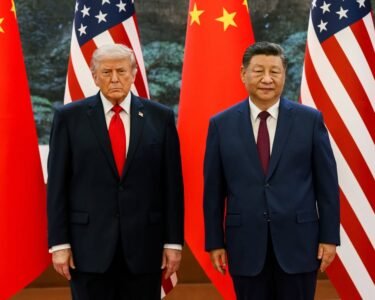
US President Donald Trump told AFP on Friday that a nuclear peace deal with Iran was “very close” and that Tehran had agreed to hand over its stockpile of enriched uranium. Speaking at a Turning Point USA event in Phoenix, Arizona, he expressed confidence that the standoff was near resolution.
Iran, however, flatly rejected that characterization. Tehran pushed back on Trump’s claim that its enriched uranium stockpile was being surrendered, saying the stockpile was not going anywhere.
This public contradiction between the two governments underscores just how fragile the current diplomatic process remains. Both sides appear to be playing to domestic audiences as much as to each other.
Trump also told NATO to “stay away” after the alliance offered to help secure the Strait of Hormuz — a move that reflects the administration’s preference for a bilateral resolution over multilateral involvement.
Lebanon Ceasefire: How It Connects to the Strait
The reopening of the Strait of Hormuz was directly linked to a ceasefire agreement in Lebanon. Tehran had made halting the Lebanon conflict a condition for any broader deal with the United States, and Washington ultimately pushed Israel to stand down.
Trump stated that Israel had been “prohibited” by the US from carrying out further strikes, saying that enough was enough. He also pledged that the United States would work with Lebanon to address the Hezbollah situation through appropriate means.
Fighting in Lebanon began on March 2, 2026, when Hezbollah fired rockets into Israel in retaliation for the killing of Iranian Supreme Leader Ali Khamenei. The 10-day ceasefire now in effect has allowed displaced Lebanese families to return to their homes in the south and in bomb-damaged areas of south Beirut.
Iranian-backed Hezbollah supporters in Beirut celebrated the ceasefire, publicly displaying portraits of the assassinated Supreme Leader Khamenei as the truce took effect.
The ceasefire, however, remains under significant strain. Israel’s Prime Minister Benjamin Netanyahu warned that the campaign against Hezbollah was not finished, stating publicly that dismantling Hezbollah remained a key objective. Hezbollah, for its part, said it remained ready to respond to any Israeli violations of the truce.
What Happens to Oil Prices If Hormuz Closes Again?
Global oil markets reacted quickly to the news of the strait’s reopening on Friday. Oil prices, which had already been falling on hopes of a negotiated settlement, dropped further. Stock markets moved upward as traders absorbed the signs of progress.
The USA further influenced market dynamics late Friday when it issued another waiver allowing the sale of Russian oil and petroleum products already at sea. That move is expected to soften oil prices further by increasing global supply.
But the equation could reverse sharply if Iran follows through on its threat to close the Strait of Hormuz again. Any closure would immediately reduce global oil supply, driving prices higher and putting pressure on economies worldwide — especially those in Asia that depend heavily on Gulf energy exports.
Analysts have long identified the strait as the single most critical maritime chokepoint in the global oil supply chain. Even a credible threat of closure is enough to move energy markets.
What Comes Next?
The next 10 days will be decisive. The Lebanon ceasefire is currently set for only 10 days, and both sides must navigate a complex web of demands to extend it. Iran wants the US naval blockade lifted. The USA wants Iran’s enriched uranium off the table. Israel wants Hezbollah removed from the area south of the Litani River.
Each of these conditions is difficult to fulfill quickly. And the Strait of Hormuz remains the pressure valve that Tehran controls if talks stall.
Lebanese President Joseph Aoun struck a more measured tone, insisting that Lebanon would no longer serve as an arena for outside conflicts — a sign that Beirut is trying to assert some independence in a situation largely controlled by external powers.
The situation remains fluid. What is clear is that the Strait of Hormuz is not just a shipping lane — it is a geopolitical lever. As long as the USA and Iran remain locked in their standoff, the waterway will remain under threat.
Stay informed on the latest developments in the US-Iran crisis and global energy security — bookmark this page for real-time updates.