 By
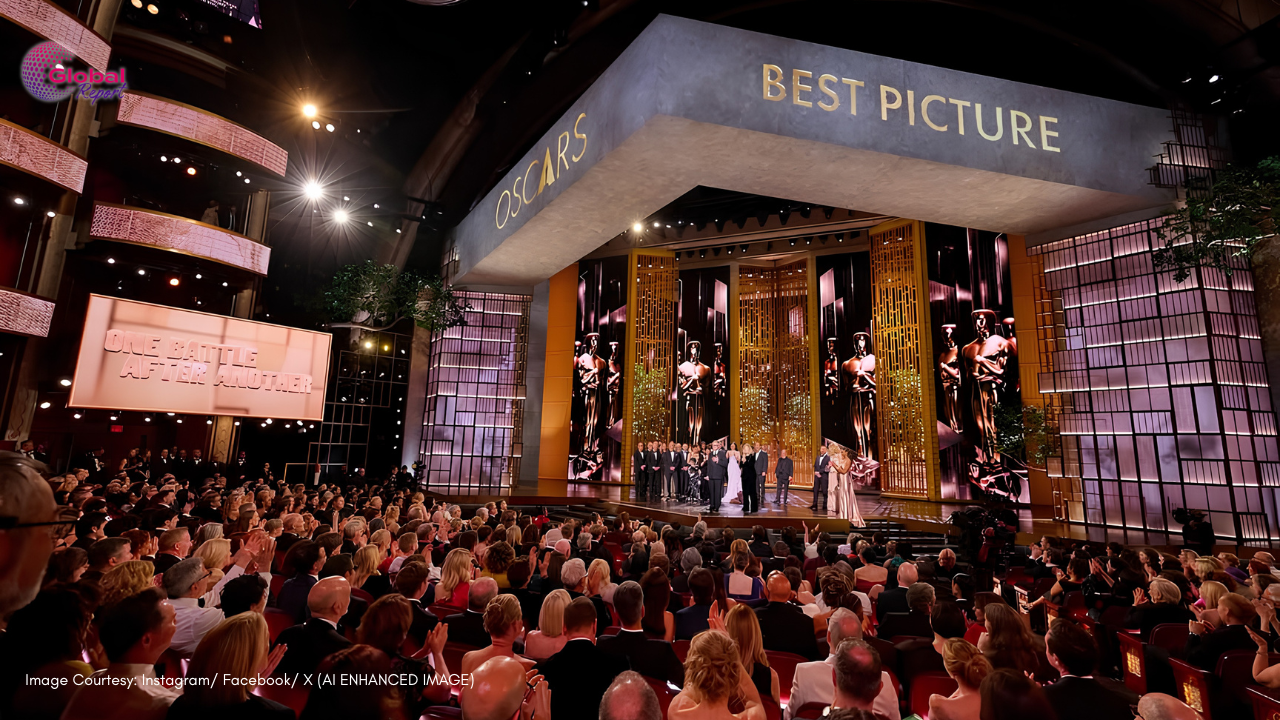
By The Academy of Motion Picture Arts and Sciences made a landmark ruling on Friday: AI actors and AI-generated writing will not be eligible to win an Oscar. The decision comes as artificial intelligence tools grow more capable — and more controversial — across the global entertainment industry.
This marks one of the first times any major awards body has formally defined the boundary between human creativity and machine output. For Hollywood, the implications reach far beyond awards season.
What the Oscars AI Ruling Actually Says
The Academy updated its eligibility requirements on Friday, May 2, 2026. Under the new rules, acting must be “demonstrably performed by humans” and writing “must be human-authored” to qualify for an Oscar nomination.
The Academy described these changes as “substantive” — a deliberate choice of language that signals this is a major policy shift, not a routine administrative tweak. The rules apply to both feature films and documentaries.
The Academy also reserved the right to request additional documentation from any film where questions about AI involvement arise. Specifically, it stated it may ask for details on “the nature of the use and human authorship” if a nomination comes under scrutiny.
The burden of proof, in other words, now rests with the filmmakers.
Background: Why the Academy Had to Act
For most of Hollywood’s history, the Oscars never needed to define what “human” acting or writing meant. Those things were simply assumed.
The rise of generative AI changed that assumption overnight. Tools powered by large language models can now produce full screenplay drafts in minutes. AI voice and image synthesis can recreate deceased actors onscreen with unsettling realism. The industry needed a line — and the Academy just drew one.
The Academy of Motion Picture Arts and Sciences has governed the Oscars since 1927. It represents over 10,000 film industry professionals across 17 branches, including actors, directors, writers, and producers. A policy shift from this body carries institutional weight that extends far beyond award eligibility.
Technology has always been part of filmmaking. Computer-generated imagery (CGI) has been used widely since the 1990s and is broadly considered a manual craft — skilled human artists using software to build film elements frame by frame. AI tools are fundamentally different. They are designed to automate creative output entirely through simple prompts, removing the human hand from the process almost completely.
That distinction is now the official position of the Oscars.
AI Actors: The Val Kilmer Case and the New Reality
One of the most talked-about examples of AI use in film today involves the late actor Val Kilmer. Kilmer, who died in 2025, is reportedly set to be recreated using AI technology to play a lead role in an upcoming film. The project has drawn widespread debate about the ethics of digitally resurrecting deceased performers without the ability to obtain meaningful consent.
This is not an isolated case. London-based actor and comedian Eline van der Velden made headlines when she revealed she had created an entirely AI-generated actor, with the stated goal of making that virtual performer “a global superstar.” The fictional AI performer was designed to compete directly with human actors for roles and audience attention.
These developments made the Academy’s position untenable. If an AI-generated performer could theoretically be nominated — and win — an Oscar, the award’s credibility as a celebration of human artistry would be fundamentally compromised.
Under the new Oscars rules, performances must be “demonstrably performed by humans.” This phrasing is deliberately firm. It does not leave room for hybrid performances where AI generates the majority of the content while a human contributes minimal input. The bar is clear: human performance must be the core of any nominated work.
View this post on Instagram
AI Writing and the Hollywood Writers Strike Legacy
The question of AI in screenwriting did not emerge in 2026. When Hollywood writers went on strike in 2023, one of their central demands was protection against studios using AI tools to generate or rewrite scripts — effectively replacing human writers at a fraction of the cost.
That strike, led by the Writers Guild of America (WGA), lasted 148 days and stands as one of the most significant labor actions in entertainment industry history. The eventual deal included provisions limiting AI use in script development — but those protections exist at the union contract level, not at the awards eligibility level.
The Academy’s new rule fills that gap directly. By requiring that writing submitted for Oscar consideration “must be human-authored,” the Academy reinforces and extends the principles the WGA fought for. A script generated primarily by an AI tool — regardless of how sophisticated — is now ineligible for Best Original Screenplay or Best Adapted Screenplay consideration.
This matters beyond the trophy itself. The Oscars do not simply celebrate box office success. They certify craft and creative quality. A screenplay that wins an Academy Award carries prestige that shapes careers, attracts future funding, and sets a benchmark for what the industry values in storytelling.
An AI-authored script will not carry that prestige. Not under the new rules.
Where AI Is Still Allowed at the Oscars
The Academy’s ruling is specific — and it is equally important to understand what it does not restrict.
Outside of acting and writing, AI tools remain permitted in filmmaking. A director who uses AI for visual effects, sound design, color grading, or editing faces no eligibility penalty. The Academy stated clearly that in those contexts, AI tools “neither help nor harm the chances of achieving a nomination.”
The Academy framed this explicitly: it will judge “the achievement, taking into account the degree to which a human was at the heart of the creative authorship when choosing which movie to award.”
This approach draws a clear distinction between creative authorship and technical assistance. CGI enhances human vision. AI writing and AI performance replace it. That difference is now the governing principle for Oscars eligibility.
The Academy also noted that studios using AI in other technical areas can expect standard evaluation — judges will weigh human creative involvement without a presumption of penalty or favor.
What This Means for Hollywood’s Future
The Academy’s decision is a signal — and Hollywood will be watching how it gets enforced.
For studios, the ruling creates a direct incentive to document human involvement in writing and performance. Any production that relies heavily on AI for screenplay generation or performance synthesis now carries real reputational risk when awards season arrives.
For actors, this ruling offers a formal layer of protection. The Screen Actors Guild (SAG-AFTRA) has fought for similar protections in contract negotiations for years. The Academy’s position adds institutional authority to those arguments. An Oscar-winning performance must now, by definition, be a human one.
For writers, the ruling validates years of advocacy. The WGA’s warnings about AI replacement were dismissed by some as alarmist in 2023. The Oscars’ new rules suggest those warnings were entirely prescient.
The broader implications extend well beyond Academy Awards season. As AI tools grow more sophisticated and more deeply embedded into Hollywood production pipelines, the industry will continue to confront fundamental questions about creativity, authorship, and value.
Other major awards bodies — including BAFTA, the Emmys, and the Golden Globes — now face their own moment of reckoning. If the world’s most prestigious film award requires human authorship, alignment from peer institutions becomes a matter of when, not if.
Key Takeaways
- The Oscars now require all acting to be “demonstrably performed by humans” and all writing to be “human-authored” for award eligibility.
- The Academy described the changes as “substantive” updates — not minor rule adjustments.
- AI actors, including digitally recreated deceased performers, cannot win an Oscar under the updated rules.
- AI-generated writing is ineligible for Best Original and Best Adapted Screenplay nominations.
- AI use in technical departments — VFX, sound, editing — remains permitted and does not affect nomination eligibility.
- The Academy reserves the right to request documentation about human creative involvement in any nominated work.
- The ruling directly echoes protections the Writers Guild of America secured during the 2023 Hollywood strike.
Frequently Asked Questions
Q: Can AI-generated performances win an Oscar under the new rules? A: No. The Academy now requires that all acting submitted for Oscars consideration be “demonstrably performed by humans.” AI-generated or AI-recreated performances, including those using a deceased actor’s likeness, are ineligible for Academy Awards.
Q: Does the Oscars ruling ban AI from filmmaking entirely? A: No. The Academy’s new policy specifically targets acting and writing eligibility. AI tools used in areas like visual effects, sound design, and editing remain permitted and do not affect a film’s chances of receiving nominations in technical categories.
Q: What happens if a studio uses AI to help write a screenplay? A: If the writing is not “human-authored,” it becomes ineligible for Oscars consideration in screenplay categories. The Academy also reserves the right to request documentation about how a script was created if questions about AI involvement arise during the nominations process.
Q: How does this ruling connect to the Hollywood writers strike? A: The 2023 WGA strike was partly driven by fears that studios would use AI tools to replace human screenwriters. The Academy’s new rule extends those protections into awards eligibility, reinforcing what the WGA negotiated at the contract level.
Q: Will other awards bodies follow the Oscars’ lead on AI rules? A: No formal announcements have been made, but industry observers widely expect organizations like BAFTA, the Emmys, and the Golden Globes to consider similar policies as AI use in entertainment production continues to accelerate.
The Academy of Motion Picture Arts and Sciences has drawn a clear line: the Oscars belong to human artists. By requiring that acting be “demonstrably performed by humans” and writing be “human-authored,” the Academy has done more than update a rulebook — it has made a defining statement about what cinema is for.
As AI tools grow more sophisticated and more deeply integrated into Hollywood production, these rules will face pressure and scrutiny. But for now, the message from the most prestigious film awards body on earth is unambiguous: creativity without a human at its heart will not be celebrated here.
The entertainment industry — and the AI companies developing tools for it — will need to respond accordingly.