 By
By Taylor Swift has been named one of the 30 greatest living American songwriters by The New York Times — a recognition that places her alongside some of the most celebrated names in music history. The list, published by the NYT Magazine in late April 2026, also includes legends such as Bob Dylan, Stevie Wonder, Dolly Parton, and Paul Simon.
The announcement came alongside a candid interview in which Swift opened up about her songwriting process, the albums she feels were overlooked, and the teenage moment that sparked one of her most iconic songs.
The New York Times List: What It Means
Being named one of the greatest living American songwriters by The New York Times is not a casual accolade. The NYT Magazine assembled a list of just 30 living artists — a deliberately tight selection that required editors and critics to make hard choices across genres, generations, and decades of output.
Taylor Swift’s inclusion places her in a category that spans soul, country, rock, hip-hop, folk, and pop. That range alone tells you something: this is not a genre poll or a popularity contest. It is a serious editorial judgment about songwriting craft.
For Swift, who began her career as a teenage country singer-songwriter in Nashville before becoming one of the best-selling music artists of all time, the recognition underscores a reputation that has been building for nearly two decades. Her ability to write songs that feel simultaneously personal and universally relatable has been cited by critics, fellow artists, and academics as the defining trait of her work.
Taylor Swift on the Songs People “Slept On”
In her interview with The New York Times, Swift was refreshingly direct about how she measures her own creative instincts against public reception — and what happens when the two don’t immediately align.
“Oftentimes when I love something to a certain degree, that tends to match up with people,” she said. “And it could be that it doesn’t match up with the way people feel ’til six years later.”
Her prime example was Reputation, her 2017 studio album, which received a more mixed critical reception at release compared to her earlier records. Swift was unapologetic about her feelings at the time.
“I loved the Reputation album. I was like, ‘You guys say what you want. I know what I did. I love it,'” she said. “You can come around if you want. It’s O.K. if you don’t.”
She pointed specifically to the track …Ready for It? as a song she felt audiences initially underestimated. “People slept on that song!” she said, noting that listeners have since come around — often years after the album’s release.
This delayed critical appreciation is a pattern Swift seems both familiar with and unbothered by. Her confidence in her own creative judgment, even when public opinion lags behind, reflects the mindset of a songwriter who writes first for herself and trusts the audience to follow.
View this post on Instagram
How Love Story Was Born — at Age 17
Perhaps the most revealing moment in Swift’s NYT interview was her account of how Love Story — still one of her most recognizable songs — came to exist.
Swift wrote the song at 17 years old, sitting alone in her bedroom after her parents refused to let her go on a date with an older boy. “I wrote the song ‘Love Story’ when I was 17, sitting in my bedroom, mad at my parents because they wouldn’t let me go on a date with a guy who was too old,” she recalled.
She added with characteristic humor: “And this is why you need to discipline your kids because they might write songs that go #1.”
Love Story was released in 2008 as the lead single from her second studio album, Fearless. It became a global hit, reaching number one in multiple countries and becoming one of the best-selling singles in country music history. The song has since been re-recorded as part of Swift’s ongoing Taylor’s Version project.
The origin story of Love Story is significant not just as a charming anecdote. It speaks to Swift’s creative process: turning raw, personal emotion — adolescent frustration, longing, defiance — into melody and narrative. That ability to transform private experience into broadly resonant music is what separates Swift as a songwriter, not just as a performer.
Who Else Made the Greatest Living Songwriters List
The New York Times list of the 30 greatest living American songwriters is a wide-ranging collection of artists across multiple genres and generations. Alongside Taylor Swift, the publication named:
- Bob Dylan — the Nobel Prize-winning folk and rock legend, widely considered one of the greatest songwriters of the 20th century
- Stevie Wonder — the Motown icon whose run of albums in the 1970s remains one of the most celebrated creative streaks in pop music history
- Carole King — the songwriter behind hundreds of hit records, best known for her landmark 1971 album Tapestry
- Bruce Springsteen — the New Jersey rock icon whose songs about working-class American life have become cultural touchstones
- Paul Simon — half of Simon & Garfunkel and a prolific solo artist with a career spanning six decades
- Jay-Z — widely regarded as one of the greatest rappers and lyricists in hip-hop history
- Mariah Carey — a five-octave vocalist and songwriter who has written or co-written the vast majority of her catalog
- Dolly Parton — country music royalty and one of the most accomplished songwriters in American history, with credits including I Will Always Love You
- Lionel Richie — the soul and pop songwriter behind some of the most beloved ballads of the 1980s
- Smokey Robinson — Motown architect and composer of classic hits for The Miracles, The Temptations, and Marvin Gaye
- Lana Del Rey — the contemporary singer-songwriter known for her cinematic, melancholy style
The breadth of the list — from Motown to hip-hop, from country to indie pop — reflects The Times’ intention to measure songwriting as a craft across different traditions, not simply one era or one sound.
Taylor Swift’s Songwriting Legacy: A Closer Look
Taylor Swift began writing songs in elementary school and signed her first record deal with Big Machine Records at age 14. From the beginning, her creative model was unusual for the pop industry: she wrote or co-wrote nearly everything she released, at a time when most major-label pop acts relied heavily on professional songwriting teams.
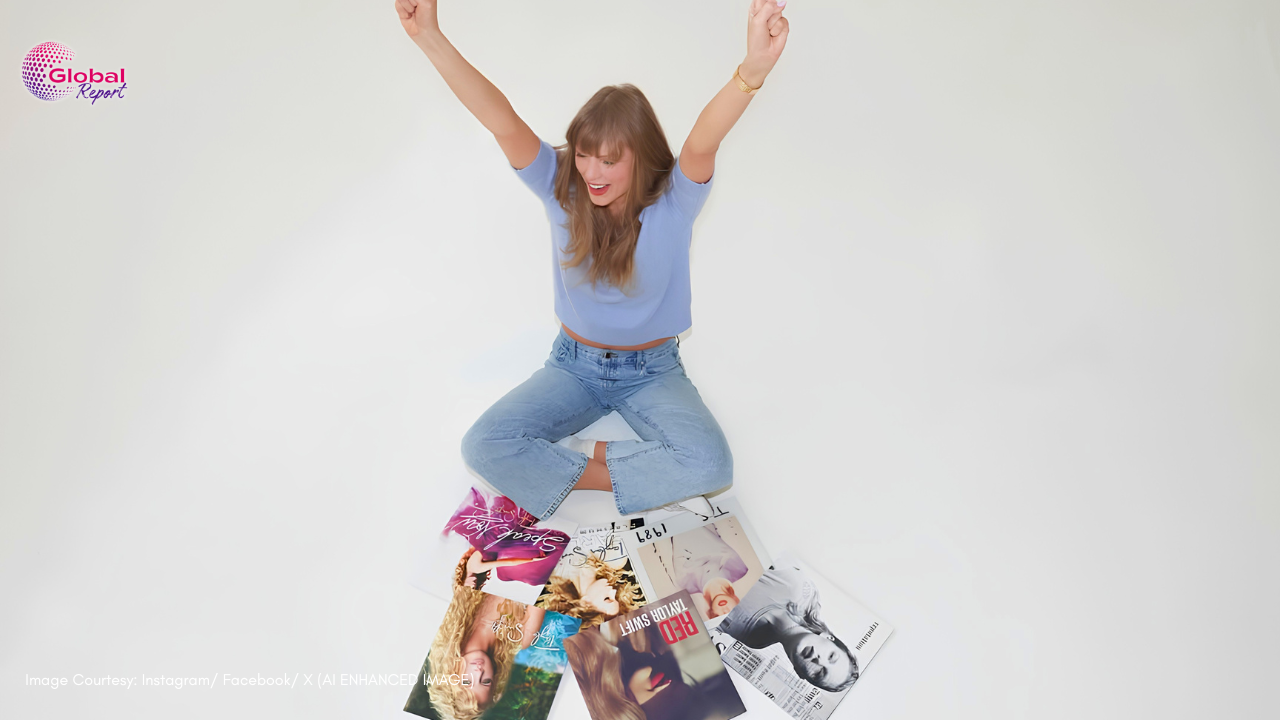
Her debut album in 2006 established that template. She followed it with Fearless (2008), Speak Now (2010) — an album she wrote entirely on her own — and Red (2012), each expanding her lyrical range. By the time 1989 arrived in 2014, Swift had successfully repositioned herself as a pop artist without losing the autobiographical songwriting instincts that built her audience.
Her catalog now spans eleven original studio albums, including the surprise releases Folklore and Evermore in 2020, both of which received widespread critical praise and positioned her as a songwriter capable of operating in entirely different registers — introspective, fictional, literary — from the diary-style pop she had built her career on.
She is also one of the few major artists to have undertaken a full re-recording of her catalog in response to a dispute over master ownership — a project that has itself become a significant moment in conversations about artist rights in the music industry.
What This Recognition Means for Pop Music
Taylor Swift’s placement on The New York Times’ greatest living American songwriters list carries implications beyond one artist’s career. It signals a broader shift in how the critical establishment evaluates pop music — and who gets to be part of the canon.
For much of the 20th century, lists like this skewed heavily toward rock, folk, and soul — genres that the critical press had historically treated as more serious than pop or country. The presence of Swift alongside Dylan and Springsteen suggests that commercial pop songwriting, when executed at the highest level, is being assessed on its own terms.
It also reflects a growing recognition that songwriting — not just performing or producing — remains the core of Swift’s artistic identity. She has consistently written in response to her own life, shaped albums around narrative arcs, and returned obsessively to themes of memory, love, loss, and public scrutiny in ways that literary critics have increasingly engaged with seriously.
Key Takeaways
- Taylor Swift has been named one of the 30 greatest living American songwriters by The New York Times Magazine in April 2026.
- She joins Bob Dylan, Stevie Wonder, Dolly Parton, Bruce Springsteen, Jay-Z, and others on the list.
- Swift revealed that Reputation and specifically …Ready for It? were songs she felt were initially overlooked by audiences.
- Love Story was written when Swift was 17 years old, after a dispute with her parents — and went on to become a #1 hit.
- The list reflects a broader shift in critical recognition of pop and country songwriting as legitimate art forms.
Frequently Asked Questions
Q: Why was Taylor Swift named one of the greatest living American songwriters? A: The New York Times recognized Taylor Swift for her two-decade career as a songwriter who writes or co-writes nearly all of her material. Her catalog spans multiple genres, and her ability to transform personal experience into broadly resonant lyrics has earned sustained critical and commercial recognition.
Q: What is the New York Times’ greatest living American songwriters list? A: The list is a curated selection published by NYT Magazine in April 2026, naming 30 living songwriters judged to represent the pinnacle of American songwriting across all genres, including country, rock, soul, pop, hip-hop, and folk.
Q: Which Taylor Swift song does she feel people slept on? A: Swift specifically mentioned …Ready for It? from her 2017 album Reputation as a track she believed audiences underrated upon release. She noted that listeners have since revisited and appreciated the song years later.
Q: Who else is on the NYT’s greatest living American songwriters list? A: The list includes Bob Dylan, Stevie Wonder, Carole King, Bruce Springsteen, Paul Simon, Jay-Z, Mariah Carey, Dolly Parton, Lionel Richie, Smokey Robinson, and Lana Del Rey, among others.
Q: How did Taylor Swift write Love Story? A: Swift wrote Love Story at age 17 while sitting in her bedroom, frustrated that her parents had refused to let her go on a date with an older boy. The song was released in 2008 and became one of the best-selling country singles in history.
Taylor Swift’s inclusion among The New York Times’ 30 greatest living American songwriters is both a personal milestone and a cultural statement. It places one of the most commercially successful artists of her generation alongside the foundational figures of American music — and it does so on the basis of craft, not just popularity.
Her candid reflections on Reputation, Love Story, and the relationship between her own instincts and public reception offer a rare window into how she thinks about her work. As Swift continues to tour, re-record her back catalog, and shape the conversation around artist rights and creative ownership, her legacy as a songwriter — not just a star — only grows more defined.