 By
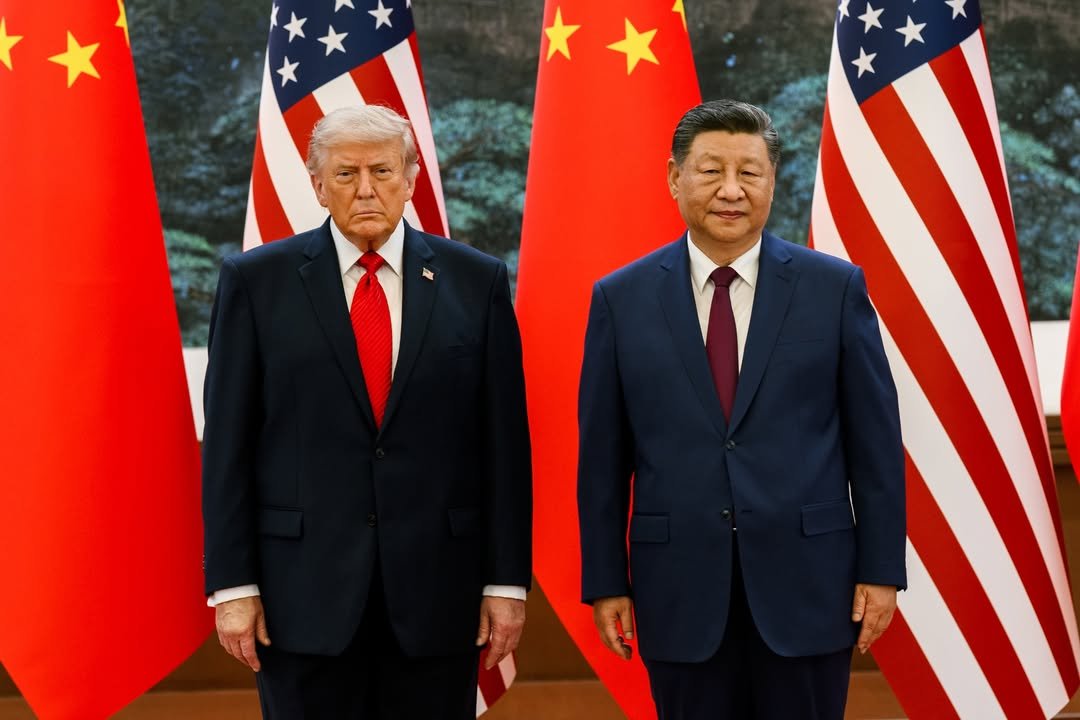
By Donald Trump arrived in Beijing on May 13, 2026, for a two-day summit with Chinese President Xi Jinping — the first visit by a sitting U.S. president to China since Trump’s own 2017 trip. The meeting, held at the Great Hall of the People, was framed by both leaders as a turning point, but Xi delivered an unmistakable warning: mishandling the Taiwan issue could push the world’s two biggest powers toward open conflict.
The stakes could not be higher. Trade, technology, Taiwan, and the ongoing Iran war all sat on the agenda as Trump and Xi met face-to-face for the first time since their October 2025 encounter on the sidelines of the APEC summit in South Korea.
The Summit Begins: Pomp, Pageantry, and Power
The opening ceremony at the Great Hall of the People featured a full honor guard, and crowds of children waving flowers and flags lined the entrance. It was a carefully orchestrated display — Beijing wanted the world to see this meeting as a moment of global consequence.
Xi opened proceedings by stating that stable relations between the U.S. and China benefit the entire world. “When we cooperate, both sides benefit; when we confront each other, both sides suffer,” he said in remarks open to media.
Donald Trump responded in characteristic fashion. “You’re a great leader, sometimes people don’t like me saying it, but I say it anyway,” he told Xi. He later added that some were calling this “the biggest summit ever.”
Behind that choreographed opening, however, lay real tension — over Taiwan, trade deficits, semiconductor access, and Iran.
Trade Talks: What Both Sides Want
The summit follows months of behind-the-scenes negotiations. According to Chinese state media outlet Xinhua, Xi told Trump that talks between economic and trade teams on Wednesday had reached an “overall balanced and positive outcome.”
The current framework traces back to an October 2025 trade truce in which Donald Trump suspended triple-digit tariffs on Chinese goods, while Xi backed away from restricting global supplies of rare earths — materials critical for manufacturing everything from electric vehicles to advanced weaponry.
Both sides arrived in Beijing with specific shopping lists.
Washington wants China to buy more Boeing aircraft, agricultural products, and U.S. energy exports in order to reduce a trade deficit that has long frustrated Trump. The U.S. also wants China to open its domestic market more broadly to American industry — Trump stated this would be his first request of Xi directly.
Beijing, in turn, wants the U.S. to loosen restrictions on exports of chipmaking equipment and advanced semiconductors — a move Washington has so far resisted on national security grounds. Nvidia CEO Jensen Huang’s presence at the summit as a late addition signals that semiconductor policy is high on the agenda.
The two sides are also expected to establish formal dialogue forums on AI — an area where both nations are competing aggressively for dominance.
Xi’s Alarming Taiwan Warning Explained
Xi’s most pointed remarks came on Taiwan. According to the Chinese readout of the talks — which ran for just over two hours — Xi told Donald Trump that Taiwan was the most important issue in U.S.-China relations.
He warned that if the issue were handled poorly, it could lead to conflict and an “extremely dangerous situation.”
The warning is significant context. A $14 billion U.S. arms sales package to Taiwan remains pending Trump’s approval. China reiterated its strong opposition to those sales on Wednesday, ahead of the summit.
Under U.S. law, Washington is obligated to provide Taiwan — the democratically governed island that Beijing claims as its own territory — with the means to defend itself, despite the absence of formal diplomatic ties. That legal requirement has long been a flashpoint in U.S.-China relations, and Xi made clear it remains a red line.
For Xi, who faces no comparable domestic political pressure, Taiwan is arguably the highest-priority issue on the entire bilateral agenda.
The Iran Wildcard: Can Xi Help Trump?
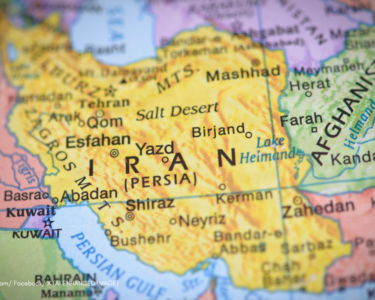
Donald Trump is also expected to press Xi to use China’s influence over Iran to push Tehran toward a negotiated end to the ongoing conflict. The Iran war has been a persistent drag on Trump’s approval ratings and has contributed to inflation at home.
U.S. Secretary of State Marco Rubio, speaking aboard Air Force One en route to Beijing, argued it was in China’s own economic interest to help resolve the crisis. With many Chinese ships stuck in the Gulf, and global trade slowing as a result, Beijing’s exporters are also feeling the pain.
Analysts, however, are skeptical. Iran serves as a strategic counterweight to U.S. influence in the region — a relationship Beijing values regardless of the economic disruption. Few expect Xi to exert serious pressure on Tehran, though diplomatic language on the subject will likely feature in any joint statement.
Power Dynamics Have Shifted Since 2017
One of the more striking subplots of this summit is the reversal in leverage between the two sides.
When Trump visited Beijing in 2017, China went out of its way to lavish him — state banquets, cultural tours, and promises to purchase billions in U.S. goods. This time, it is the United States that made the trip, and analysts say the balance of influence has shifted.
Ali Wyne, senior adviser for U.S.-China relations at the International Crisis Group, noted that Trump had effectively acknowledged China’s status as a co-equal superpower by reviving the term “G2” — a phrase describing a bilateral superpower partnership — when he last met Xi in October.
Trump also arrives with a meaningfully weakened hand. U.S. courts have limited his ability to impose tariffs unilaterally on Chinese exports. The Iran war has fueled inflation and elevated the political risk heading into November’s midterm elections, where Trump’s Republican Party could lose control of one or both chambers of Congress.
Xi, by contrast, faces no election cycle and no comparable economic crisis — though China’s economy has faced its own structural headwinds in recent years.
Tech CEOs at the Table: Musk, Huang, and Cook
A notable feature of this summit is the delegation of tech and business leaders traveling with Donald Trump. Elon Musk, Nvidia CEO Jensen Huang, and Apple CEO Tim Cook were all present during the opening sessions with Xi Jinping.
Their inclusion is not symbolic. Each represents a U.S. company with significant exposure to Chinese markets or supply chains.
Musk’s businesses have manufacturing and consumer interests in China. Nvidia’s advanced chips are at the center of the semiconductor export control debate. Apple relies heavily on Chinese manufacturing for the iPhone — a dependency that has become increasingly fraught as U.S.-China relations have grown more complex.
Musk, speaking to reporters as he left the Great Hall, called the opening talks “wonderful” — though substantive outcomes will depend on what is agreed behind closed doors.
What This Means for the World Economy
A stable U.S.-China relationship has direct consequences for global markets, supply chains, and geopolitical risk. The October 2025 trade truce already brought a measure of relief — the threat of triple-digit tariffs returning, combined with potential rare earth export restrictions, had rattled global manufacturers and investors.
If this Beijing summit produces a framework to sustain and deepen that truce, the spillover effects will be broadly positive: lower input costs for manufacturers worldwide, reduced inflation pressure in the U.S., and reduced disruption to global semiconductor supply chains.
If talks break down — particularly over Taiwan or semiconductor controls — the downside risk is substantial. A renewed trade war between the world’s two largest economies would slow global growth at a time when the Iran conflict is already creating headwinds.
The fact that Xi has a reciprocal visit to the United States tentatively planned for later in 2026 — his first since Trump returned to office in 2025 — suggests both sides have a genuine interest in sustaining the relationship.
Frequently Asked Questions
Q: Why is Donald Trump visiting China in 2026? A: Donald Trump traveled to Beijing for a two-day summit with Xi Jinping to maintain the October 2025 trade truce, discuss Taiwan, address the Iran war, and open dialogue on AI and semiconductor trade. It is the first visit by a U.S. president to China since Trump’s own 2017 trip.
Q: What is the Taiwan issue in the Trump-Xi summit? A: Xi Jinping warned Donald Trump that Taiwan remains the most critical issue in U.S.-China relations. A $14 billion U.S. arms sales package to Taiwan is pending Trump’s approval, and China has strongly opposed the deal. Xi cautioned that poor handling of the Taiwan issue could lead to conflict.
Q: What did the US and China agree on at the Beijing summit? A: According to Chinese state media, trade teams reached an “overall balanced and positive outcome” ahead of the leaders’ meeting. The summit aims to sustain the trade truce established in October 2025 and establish formal forums for trade, investment, and AI dialogue. Full outcomes are expected following the two-day talks.
Q: Why was Elon Musk at the Trump-Xi summit? A: Elon Musk, along with Nvidia’s Jensen Huang and Apple’s Tim Cook, joined Donald Trump’s delegation to Beijing. Their presence reflects the deep commercial ties between major U.S. tech and business firms and the Chinese market, particularly on issues like semiconductor exports and manufacturing supply chains.
Q: Has the balance of power shifted between the U.S. and China? A: Analysts say yes. Unlike Trump’s 2017 Beijing visit, where China made significant concessions and lavished the U.S. delegation, the current summit sees the U.S. making the trip amid a weakened domestic position — with Trump’s approval ratings dented by the Iran war and U.S. courts limiting his tariff authority.
The Beijing summit between Donald Trump and Xi Jinping represents one of the most consequential diplomatic encounters of 2026. With trade, Taiwan, AI, and Iran all on the table, the two leaders are navigating a relationship that defines the shape of global order.
The opening day delivered positive signals on trade and a sobering warning on Taiwan — a combination that reflects both the opportunity and the fragility at the heart of U.S.-China relations. As both sides work toward a joint framework, the world is watching closely to see whether this summit produces durable progress or simply manages tensions for another year.
Follow Global Report Online for live updates as the two-day summit concludes.