 By
By Donald Trump is simultaneously firing off social media warnings, threatening military force, and sending his top team to Islamabad for high-stakes peace negotiations with Iran — all on the same day. The situation is fast-moving, fragile, and far from settled.
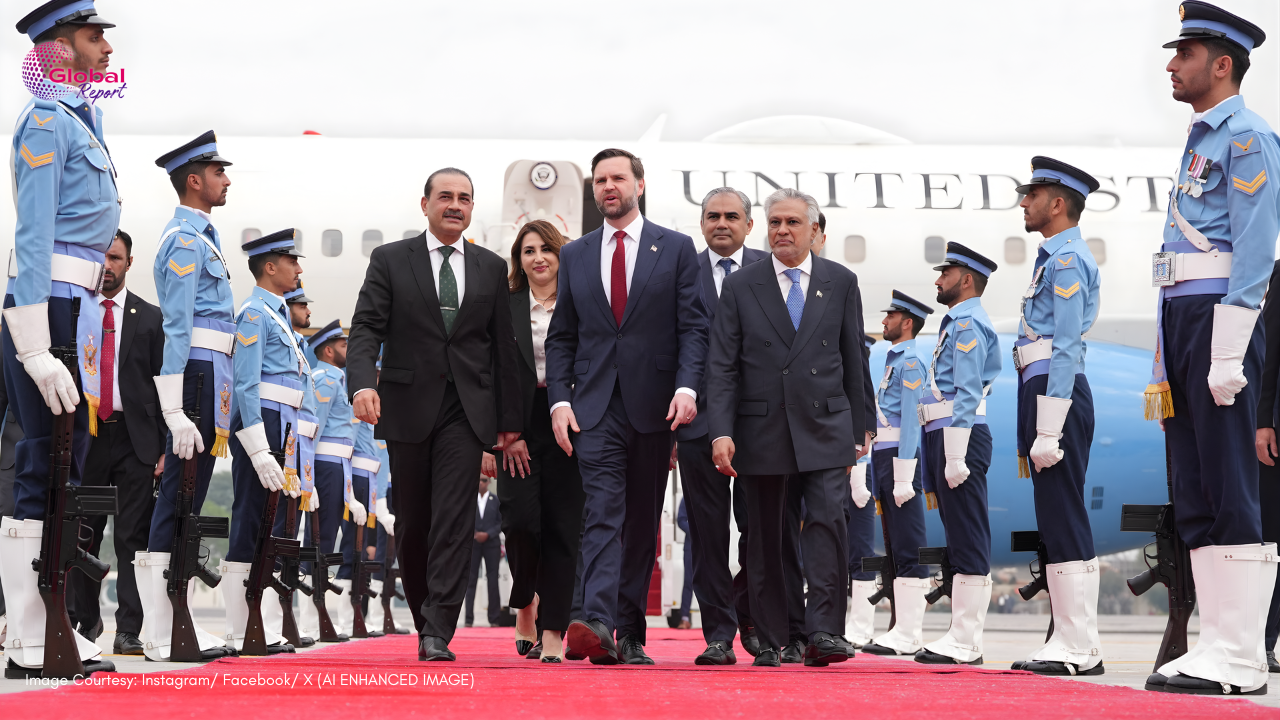
Trump Takes to Social Media While Vance Flies to Pakistan
As Vice President JD Vance boarded a flight to Islamabad on Friday, Donald Trump kept up a steady stream of pointed posts on Truth Social — a sharp contrast to the diplomatic tone his team was preparing to strike.
Trump wrote that Iranians “don’t seem to realize they have no cards, other than a short term extortion of the World by using International Waterways,” a direct reference to Iran’s near-total blockade of the Strait of Hormuz.
The president also jabbed at Iran’s military capabilities, posting that Tehran was better at public relations than at fighting. The remarks were blunt, calculated, and entirely in keeping with Trump’s dual-track strategy: keep the pressure high online while diplomats pursue a deal on the ground.
The Strait of Hormuz: The Chokepoint at the Center of It All
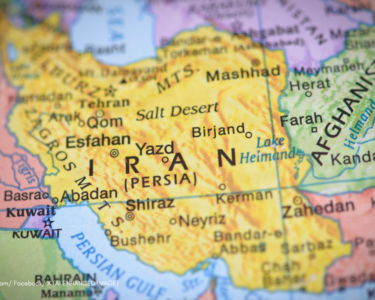
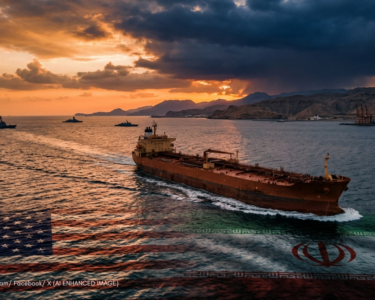
The Strait of Hormuz has become the defining flashpoint of this crisis. Roughly 20 percent of the world’s oil supply passes through the narrow waterway, and Iran’s near-total blockade since the start of the conflict has rattled global energy markets.
More than 600 vessels are stuck in the Middle East Gulf region, according to Lloyds List maritime intelligence data. Even if traffic returned to pre-conflict levels immediately, it would take over 10 days to clear the backlog of ships.
Iran has been warning idling ships that they risk attack if they attempt to travel through the strait without permission — and in some cases, without paying a toll of $1 million or more.
Trump has made reopening the Strait of Hormuz a non-negotiable demand. He posted Saturday morning that the U.S. is “starting the process of clearing out the Strait of Hormuz,” calling it a “favor” to countries around the world — including China, Japan, South Korea, France, and Germany — that lack the “courage or will” to act themselves.
Trump also claimed that empty oil-carrying ships from multiple nations are now heading to the United States to load up on American oil — a move he described as validation of U.S. energy leverage.
Who Is at the Table in Islamabad?
The U.S. delegation is led by Vice President JD Vance, joined by Special Envoy Steve Witkoff and Trump’s son-in-law Jared Kushner — the same team that led earlier negotiations over Gaza and Ukraine.
Iran reportedly expressed a preference for dealing with Vance rather than Witkoff and Kushner, both of whom had previously led indirect nuclear talks with Tehran. That preference likely influenced Trump’s decision to elevate Vance as the face of this round.
Iran’s delegation in Islamabad consists of 71 people, including negotiators, technical experts, media representatives, and security personnel. The delegation is led by Parliament Speaker Mohammad Bagher Ghalibaf and Foreign Minister Abbas Araghchi.
The scale of the Iranian delegation signals that Tehran is taking these talks seriously — even if its public posture heading into the weekend remained combative.
Iran’s Conditions Before Talks Can Begin
Iran entered the weekend negotiations with a set of preconditions that complicated the start of talks. Parliament Speaker Ghalibaf posted on X that two key commitments from the ceasefire agreement remained unfulfilled: a ceasefire in Lebanon and the release of Iran’s blocked foreign assets had yet to be implemented before negotiations could formally begin.
Iran’s position on the Strait of Hormuz was equally firm. Iranian officials stated that the Strait will not return to its prewar control system, insisting that all movements through the waterway remain under the “strict, precise and calculated control” of Iran’s armed forces.
The U.S. and Israel have maintained that the Lebanon ceasefire was never part of the original truce agreement — a direct contradiction of Iran and Pakistan’s stated understanding of the deal.
These conflicting interpretations created significant uncertainty before the first handshake even took place.
Trump’s Military Threat Remains on the Table
Donald Trump has made clear that diplomacy is only one option. In an interview with the New York Post on Friday, he said U.S. warships are being reloaded with “the best ammunition” and “the best weapons ever made” in the event talks collapse, adding that if no deal is reached, the weapons “will be used very effectively.”
Trump also stated that he is unsure whether he will support further rounds of talks if this weekend’s negotiations fail to produce results. The administration’s position is essentially this: one chance, one window.
Earlier in the week, Trump threatened to attack Iran’s power plants and bridges if the Strait of Hormuz was not reopened within two days — a deadline that was narrowly averted when Tehran agreed to the temporary two-week ceasefire on April 8.
The ceasefire is fragile. Israeli and Hezbollah forces continued exchanging strikes in Lebanon even as Vance flew to Islamabad, threatening to unravel the agreement before talks could conclude.
Pakistan’s High-Stakes Role as Mediator
Pakistan has positioned itself as the indispensable middle party in this conflict. Islamabad brokered the original ceasefire and is now hosting what it has branded — quite literally — as “The Islamabad Talks,” with digital billboards across the city carrying the branding.
The capital was placed under a two-day public holiday lockdown, with roads nearly empty, checkpoints at major arteries, and additional troops and police deployed citywide ahead of the negotiations.
Pakistan’s ambassador to the United States said his country would provide a setting to “iron out” disagreements between the parties, with the Foreign Ministry expressing hope that both sides would engage constructively toward a “lasting and durable solution.”
Prime Minister Shehbaz Sharif addressed the nation on Friday, calling this a “make-or-break moment” and asking citizens to pray for the talks’ success.
What Happens Next
The Islamabad talks represent the most direct, high-level engagement between Washington and Tehran since the conflict escalated in late February. The Trump administration’s proposal — which has not been released in full — reportedly includes commitments from Iran to abandon nuclear weapons development, surrender highly enriched uranium, accept limits on its defense capabilities, and reopen the Strait of Hormuz.
Whether Iran will accept those terms — or any modified version of them — remains the central unknown.
Vance told reporters before departing: “If the Iranians are willing to negotiate in good faith, we’re certainly willing to extend the open hand. If they’re going to try to play us, they’re going to find that the negotiating team is not that receptive.”
Donald Trump has set the terms clearly: a deal or a return to war. The next 24 hours will determine which path this conflict takes.
Stay informed on developments as the Islamabad talks unfold — the outcome will shape global energy markets, Middle East stability, and U.S. foreign policy for years to come.