 By
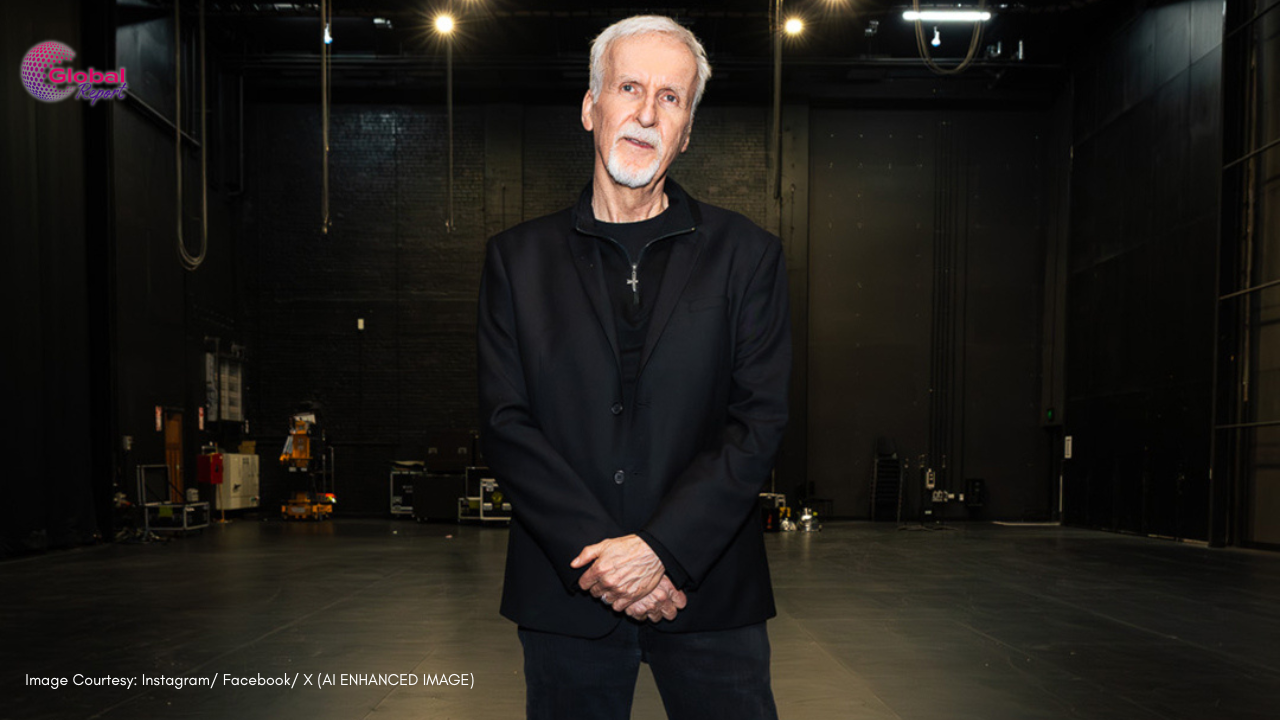
By James Cameron, one of cinema’s most powerful directors, now faces a federal lawsuit that strikes at the heart of identity rights in Hollywood. Actress Q’orianka Kilcher has filed a complaint against Cameron and The Walt Disney Company in the U.S. District Court for the Central District of California, alleging that Cameron extracted her facial features as a 14-year-old without her knowledge or consent — and used them to design Avatar’s iconic character Neytiri.
The case, first reported by Variety, also names Lightstorm Entertainment and multiple visual effects companies as defendants. Kilcher’s legal team has framed the alleged conduct not as artistic inspiration, but as systematic identity misappropriation — what her lead counsel calls flat-out “theft.”
Who Is Q’orianka Kilcher?
Q’orianka Kilcher is a Native Hawaiian and Peruvian-German actress who rose to international attention in 2005, when director Terrence Malick cast her as Pocahontas in “The New World.” She was 14 at the time — the same age at which, according to the lawsuit, Cameron first encountered her photograph in the Los Angeles Times.
Kilcher went on to build a steady acting and advocacy career, earning recognition both for her screen work and her public support of Indigenous rights. Her prominence as a young Indigenous actress in a major historical film makes the alleged use of her likeness in another major Hollywood production all the more striking.
The lawsuit states Cameron encountered a published photograph of Kilcher and directed his design team to extract and replicate her facial features as the foundation for Neytiri’s character design. At no point, Kilcher says, did she consent to this — or even know it was happening.
What the Lawsuit Claims Against James Cameron
The court filing states, in direct terms, that Kilcher “never consented to Defendants’ use of her likeness, either in Avatar or in any related product or promotion.”
Kilcher did not discover the alleged conduct until late last year, when a broadcast video interview with James Cameron started circulating on social media. In the footage, Cameron stands in front of a Neytiri sketch and identifies Kilcher directly. He states: “The actual source for this was a photo in the L.A. Times, a young actress named Q’orianka Kilcher. This is actually her…her lower face. She had a very interesting face.”
That footage became central evidence for Kilcher’s legal team.
The complaint also includes a claim under California’s recently enacted deepfake pornography statute. While that law primarily targets non-consensual digital sexual content, the filing argues that the industrial biometric replication of Kilcher’s face — without her permission — falls within its protections. This is a novel legal argument and one that legal observers will watch closely.
Cameron’s Handwritten Note: The Key Evidence
One of the most striking elements of the case is evidence that Cameron himself provided — without realizing it at the time.
According to the filing, Kilcher and Cameron met briefly at a charity event held just months after Avatar’s 2009 theatrical release. Cameron personally invited her to visit his office. When she arrived approximately one week later, Cameron was not there. A staff member presented her with a framed print of a sketch Cameron had created, along with a handwritten note reading: “Your beauty was my early inspiration for Neytiri. Too bad you were shooting another movie. Next time.”
Kilcher interpreted the gesture as personal — perhaps connected to future casting interest. She had no reason to suspect that her facial features had already been systematically processed through a professional production pipeline years before that note was written.
“When I received Cameron’s sketch, I believed it was a personal gesture, at most a loose inspiration tied to casting and my activism,” Kilcher said in a statement. “I never imagined that someone I trusted would systematically use my face as part of an elaborate design process and integrate it into a production pipeline without my knowledge or consent. That crosses a major line.”
How Kilcher’s Likeness Was Allegedly Processed
The lawsuit describes what Kilcher’s co-counsel Asher Hoffman calls a “deliberate analog-to-digital creative process” — a methodical pipeline that began with a photograph and ended in one of cinema’s most recognizable characters.
According to the complaint, Kilcher’s facial features were first replicated in production sketches. Those sketches were sculpted into three-dimensional maquettes. The maquettes were then laser-scanned into high-resolution digital models. Those models were distributed across multiple visual effects vendors to form Neytiri’s definitive digital image.
That image went on to appear in theaters, on promotional posters, in merchandise, and across Avatar’s sequels and re-releases — all without Kilcher’s knowledge.
“It is deeply disturbing to learn that my face, as a 14-year-old girl, was taken and used without my knowledge or consent to help create a commercial asset that has generated enormous value for Disney and Cameron,” Kilcher said.
Lead counsel Arnold P. Peter of Peter Law Group put the allegation plainly: “What Cameron did was not inspiration, it was extraction. He took the unique biometric facial features of a 14-year-old Indigenous girl, ran them through an industrial production process, and generated billions of dollars in profit without ever once asking her permission. That is not filmmaking. That is theft.”
The 5 Alarming Legal Remedies Kilcher Is Seeking
The complaint sets out five distinct forms of legal relief that collectively make this one of the most financially and institutionally significant lawsuits in recent Hollywood history.
1. Compensatory damages — covering the harm Kilcher suffered from the unauthorized use of her identity and likeness.
2. Punitive damages — targeting the alleged willfulness and deliberateness of Cameron’s conduct, which the complaint characterizes as systematic and knowing.
3. Disgorgement of profits — requiring Cameron and Disney to surrender financial gains tied to the unauthorized use of her likeness. Avatar alone earned more than $2.92 billion worldwide. The franchise has since expanded across sequels, merchandise, and theme park assets, making the potential scope of disgorgement enormous.
4. Injunctive relief — a court order to stop any ongoing use of Kilcher’s likeness in connection with the Avatar franchise or related products.
5. Corrective public disclosure — requiring the defendants to publicly acknowledge and correct the record regarding how Neytiri’s character was designed.
As of publication, neither James Cameron nor The Walt Disney Company has issued a public response to the filing.
What This Means for Hollywood and Identity Rights
The James Cameron lawsuit arrives as Hollywood navigates some of its most turbulent debates over identity, likeness, and digital rights. Ongoing disputes over AI-generated content, synthetic actors, and unauthorized deepfakes have placed individual identity rights squarely at the center of industry-wide legal battles.
This case is different — it involves traditional filmmaking methods, not artificial intelligence. The alleged extraction of Kilcher’s likeness happened through analog production processes in the mid-2000s. Yet the implications may be just as consequential.
If a court finds that a director can be held liable for systematically modeling a fictional character on a real person’s biometric features without consent — even using pencil-and-clay techniques — it establishes a precedent that would affect character designers, animators, and studios across the industry.
The invocation of California’s deepfake statute is particularly notable. Applying a 2020s digital identity law to a pre-digital creative process signals that Kilcher’s legal team is pushing courts to adopt a broad interpretation of identity protection. That argument alone could reshape how likeness rights are defined in California and beyond.
For Indigenous artists and communities, the case raises a harder question that goes beyond the courtroom: whose faces has Hollywood historically borrowed from, and what compensation or consent was ever sought?
Frequently Asked Questions
Q: What is the Q’orianka Kilcher lawsuit against James Cameron about? A: Kilcher alleges that James Cameron used her facial features — extracted from a published photo taken when she was 14 — to design the character Neytiri in Avatar, without her knowledge or consent. The lawsuit seeks damages, disgorgement of profits, and corrective public disclosure.
Q: What evidence does Kilcher have that James Cameron used her likeness? A: Kilcher’s legal team cites two key pieces of evidence: a handwritten note Cameron sent her after Avatar’s release referencing her as Neytiri’s “early inspiration,” and a broadcast video interview in which Cameron identifies Kilcher by name while standing before the Neytiri sketch.
Q: Has James Cameron responded to the Avatar identity theft lawsuit? A: As of the publication of this article, neither James Cameron nor The Walt Disney Company has publicly commented on or responded to the allegations.
Q: Why does the complaint mention California’s deepfake statute? A: Kilcher’s team argues that the biometric replication of her facial features without consent — regardless of the method used — falls under California’s recently enacted deepfake protections. This novel legal application of a digital statute to traditional filmmaking will be closely watched by legal professionals.
Q: How much money is at stake in this lawsuit? A: Avatar earned more than $2.92 billion globally, and the franchise has generated additional revenue through sequels, merchandise, and licensing. Because the complaint seeks disgorgement of profits linked to the unauthorized use of Kilcher’s likeness, the financial exposure for Cameron and Disney could be substantial.
The James Cameron Avatar identity lawsuit is one of the most significant entertainment legal cases in recent memory. Q’orianka Kilcher’s complaint — backed by Cameron’s own handwritten note and his on-camera identification of her — presents a factual foundation that courts and industry observers will scrutinize carefully.
As identity rights gain new urgency across Hollywood’s AI debates and digital transformation, this case may define the standard by which directors and studios are held accountable for the real human faces behind their most celebrated fictional characters. Watch this one closely — the outcome could change the rules for every character design room in the industry.
Key Takeaways
- Q’orianka Kilcher has sued James Cameron and The Walt Disney Company for using her likeness at age 14 to design Neytiri in Avatar
- Cameron allegedly directed his design team to replicate her facial features across production sketches, 3D maquettes, and high-resolution digital models
- A handwritten note from Cameron and a video interview in which he identifies Kilcher form the core of the evidence
- The complaint seeks compensatory damages, punitive damages, disgorgement of profits, injunctive relief, and corrective public disclosure
- Avatar earned over $2.92 billion globally, making the financial stakes significant
- The case invokes California’s deepfake statute — a novel legal argument applied to traditional filmmaking methods
- As of publication, neither Cameron nor Disney has responded publicly