 By
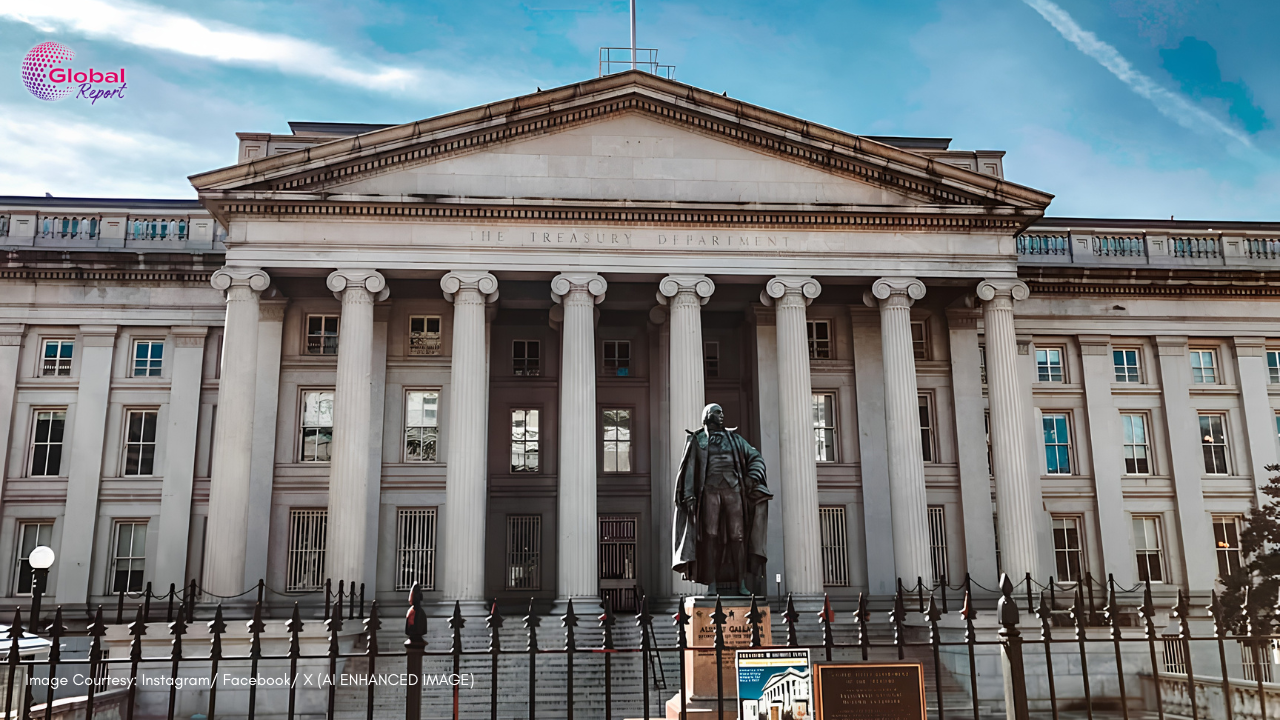
By Donald Trump‘s administration has confirmed that the transfer of 9 million defaulted student loan accounts from the Department of Education to the U.S. Treasury Department is now actively underway. The Treasury confirmed the development in an April letter to Sen. Elizabeth Warren, marking one of the most consequential shifts in federal student loan management in decades.
The letter, released publicly on May 4, 2026, reveals that two formal milestones have already been reached — and that Education Department employees are already being sent to the Treasury to support the transition.
Key Takeaways
- Donald Trump’s administration is transferring 9 million defaulted student loan accounts to the Treasury Department
- Two formal milestones have already been achieved, including inter-agency staff deployments
- No official timeline has been provided for the full handover of account management
- Sen. Elizabeth Warren has publicly opposed the move, calling it “bad for students and families”
- Involuntary collections on defaulted student loans have remained paused since January 2026
- Former officials and education policy experts have raised serious concerns about borrower disruption
What the Treasury Department Officially Confirmed
The Treasury Department, in a formal April letter to Sen. Elizabeth Warren — released on May 4, 2026 — confirmed it has begun active preparations to absorb the Department of Education’s portfolio of 9 million defaulted student loan accounts.
Mason Champion, the Treasury’s assistant secretary, authored the letter. He outlined specific steps already taken and confirmed that the process will proceed in phases, starting with defaulted accounts before expanding to the broader federal student loan portfolio.
A defaulted student loan borrower is someone who has failed to make payments for at least 270 days. These are the most financially vulnerable borrowers in the federal system — often carrying damaged credit, facing wage garnishment, or at risk of losing federal benefits. They are also the first population Donald Trump’s administration has chosen to move to the new agency.
The Department of Education separately wrote to Warren confirming its role in the transition. Its letter stated that “Treasury is well positioned to provide operational support” to the department’s ongoing work — language notably vague about the ultimate division of responsibilities between the two agencies.
Two Milestones Already Cleared
According to Champion’s letter, the administration has already met two significant milestones in the transfer process.
The first milestone involves a formal request for information from industry stakeholders. The Treasury reached out to procure agents who would help defaulted student loan borrowers understand their options for returning to good standing — such as loan rehabilitation, consolidation, or repayment plans.
The second milestone is an inter-agency staffing arrangement. Seven Department of Education employees are being sent to work at the Treasury. Two Treasury employees are being stationed at the Department of Education. Champion described this deployment as intended to “support the implementation of the partnership, with an initial focus on the transition of operational responsibility for the defaulted portfolio to Treasury.”
Despite these early steps, neither agency provided a specific timeline for when the Treasury will officially assume full management of the defaulted student loan accounts. That lack of clarity has deepened concern among borrowers, servicers, and policy observers who are watching the situation closely.
The Bigger Picture: Dismantling the Department of Education
The student loan transfer does not exist in a vacuum. Donald Trump’s administration has made dismantling the Department of Education a stated policy goal since early in his second term.
The department, created in 1979 under President Jimmy Carter, has been a recurring target of conservative criticism for nearly five decades. Republicans have long argued that education policy should be managed at the state level, and that the federal department adds bureaucratic overhead without improving outcomes. Donald Trump has been the most aggressive president in pursuing that position.
Since early 2025, the Department of Education has faced significant staffing cuts, operational restrictions, and budget reductions. Moving student loan servicing to the Treasury is widely interpreted as one of the most concrete steps yet toward reducing the department’s core functions. The department currently oversees roughly $1.7 trillion in total federal student loan debt — one of the largest debt portfolios managed by any government on earth.
The Trump administration’s argument is straightforward: the Treasury has decades of experience managing large-scale federal financial programs, including tax collection, federal benefits, and the national debt itself. It contends that the Treasury is better positioned to run an efficient, streamlined student loan operation.
Critics counter that student loan servicing requires specialized knowledge that goes far beyond financial management. The Department of Education has long-standing relationships with loan servicers, state education agencies, and borrower advocacy organizations. That institutional infrastructure took decades to build and cannot be quickly replicated elsewhere.
What Experts and Officials Are Saying
The response from policy experts and elected officials has been broadly skeptical.
Sen. Elizabeth Warren, who sent the original inquiry that prompted the Treasury’s response, said in a statement that the arrangement “is bad for students and families.” She specifically noted that neither the Treasury nor the Department of Education has provided evidence demonstrating that the transfer would improve outcomes for borrowers — a pointed challenge to the administration’s efficiency argument.
Sarah Sattelmeyer, education project director at the think tank New America, raised concerns about the systemic risks of splitting student loan operations across multiple agencies. She warned that having systems spread across multiple agencies “really puts the entire system at risk” and would make it significantly harder to communicate with borrowers and move toward a streamlined operation.
Former Education Secretary Arne Duncan, who served under President Barack Obama, was even more direct. He said the move “makes no sense educationally or from a customer service standpoint” — a blunt assessment from someone who oversaw the federal student loan system at its peak operational scale.
Multiple former Department of Education officials have also told reporters that handing management to the Treasury risks amplifying confusion for both borrowers and loan servicers, particularly during a period when millions of Americans are already dealing with income-driven repayment plan changes and ongoing legal battles over student loan forgiveness programs.
The Collections Pause That Complicates Everything
One critical detail complicates the timing of this transfer. The Department of Education suspended involuntary collections on defaulted student loans in January 2026 — meaning borrowers in default have not faced wage garnishment or the seizure of federal benefits for months.
The pause has not been lifted. Neither the Treasury nor the Department of Education has announced when enforcement will resume. When it does, the 9 million defaulted borrowers at the center of this transfer will need clear, accessible guidance about their repayment options.
That guidance needs to come from an agency they know and have dealt with before. Moving their accounts to the Treasury — precisely as the collections pause ends — means millions of people may suddenly be dealing with an unfamiliar institution at one of the most financially stressful moments in their loan histories.
Servicers will need to update their systems. Communication channels between borrowers and their account managers will need to be rebuilt. New operational procedures will have to be tested and deployed — all while the two agencies are still in the early stages of learning to coordinate.
The window between now and the restart of collections is shrinking. Every day without a clear timeline increases the risk that the transition will be incomplete when that moment arrives.
What This Means for Student Loan Borrowers
For the 9 million defaulted borrowers at the center of this transfer, the immediate reality is uncertainty. Their accounts are being moved to a new federal agency staffed by people who may lack the specific background in student loan servicing that Education Department staff have developed over years.
Borrowers in default already face limited paths forward: rehabilitation, consolidation, or full repayment. Each option involves a multi-step process that requires clear communication, accurate account records, and responsive support. An agency transition introduces the risk of processing delays, lost communications, and errors in account data.
For the broader population of federal student loan borrowers — including the tens of millions who are currently in repayment — the transfer of defaulted accounts is an early signal. If Donald Trump’s administration carries out its stated intention of moving the full federal portfolio to the Treasury, the disruption could extend far beyond the 9 million currently in default.
Donald Trump has consistently framed these structural changes as modernization efforts that will ultimately benefit borrowers. But for the millions of Americans managing federal student debt day to day, the pace and scale of these changes represent a real source of anxiety — one that will not be resolved until a clear operational plan is in place and a concrete timeline is published.
Frequently Asked Questions
Q: Why is Donald Trump transferring student loan accounts to the Treasury Department? A: Donald Trump’s administration is moving student loan accounts to the Treasury as part of a broader plan to dismantle the Department of Education. The administration argues the Treasury is better equipped to manage large federal debt portfolios, though critics, including former officials, dispute this claim.
Q: How many student loan borrowers are affected right now? A: The first phase of the transfer covers 9 million defaulted student loan borrowers — people who have not made payments for at least 270 days. The administration has indicated the rest of the federal student loan portfolio, covering tens of millions of borrowers, could follow in later phases.
Q: Are student loan collections still paused during this transition? A: Yes. The Department of Education suspended involuntary collections — including wage garnishment and seizure of federal benefits — in January 2026. That pause remains in effect, but no official end date has been announced by either the Treasury or the Department of Education.
Q: Has a timeline been set for the full student loan transfer? A: No. The Treasury’s April letter to Sen. Elizabeth Warren confirmed two early milestones but provided no specific dates for subsequent phases or for the official handover of student loan account management to the Treasury.
Q: What are experts saying about the risks of this student loan transfer? A: Education policy experts, including those at the think tank New America, have warned that spreading student loan operations across multiple agencies creates systemic risk, complicates borrower communication, and could delay the path toward a more streamlined repayment system.
Donald Trump’s plan to transfer 9 million defaulted student loan accounts from the Department of Education to the Treasury Department has moved from announcement to action. With two formal milestones confirmed, inter-agency staff deployments underway, and no timeline on the table, the transfer is progressing — but the path ahead remains undefined for the millions of borrowers whose financial lives depend on getting it right.
Whether this restructuring ultimately improves the student loan system or deepens the confusion already gripping it, as critics strongly warn, will depend on execution. What is clear today is that the federal student loan landscape is changing faster than at any point in its modern history — and millions of Americans will bear the consequences of how well or how poorly that change is managed.
Follow Global Report Online for the latest updates on U.S. education policy, student loan news, and the ongoing restructuring of federal agencies under Donald Trump.