 By
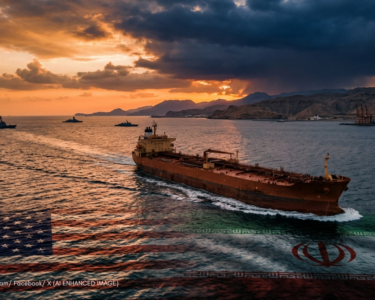
By Iran has re-closed the Strait of Hormuz — one of the world’s most strategically important waterways — just hours after briefly reopening it. The reversal came directly in response to Washington’s declaration that its U.S. blockade of Iranian ports will remain in place until Tehran agrees to a deal on its nuclear program.
The back-and-forth over the strait is sending shockwaves through global energy markets, diplomatic circles, and military command centers. Here is everything you need to know.
What Is the Strait of Hormuz and Why Does It Matter?
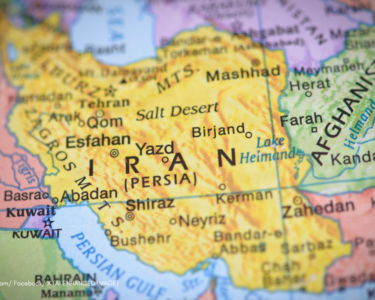
The Strait of Hormuz is the narrow passage through which roughly one-fifth of the world’s oil supply travels. It connects the Persian Gulf to the Gulf of Oman, making it the single most critical chokepoint in global energy infrastructure.
When the strait is restricted or closed, oil markets feel the pressure almost immediately. Prices rise, supply chains tighten, and energy-dependent economies — from Europe to Asia — begin to feel the strain.
Iran has long held the ability to threaten or close the strait during periods of geopolitical tension. This time, the threat has turned into action.
Why Iran Re-Closed the Strait
Iran briefly reopened the Strait of Hormuz to commercial vessels on Friday, but reversed course Saturday after the United States declared that its blockade would not be lifted in response.
Iran’s joint military command announced that “control of the Strait of Hormuz has returned to its previous state… under strict management and control of the armed forces.” It warned that restrictions would remain as long as the U.S. blockade on Iranian ports continued.
The closure is not total. A senior Iranian lawmaker, Ebrahim Azizi, head of Iran’s parliamentary National Security Commission, stated that commercial vessels may transit the strait only if they are authorized by the Revolutionary Guard and pay “required tolls” along a route set by Iran.
Trump flatly rejected that condition. When asked about tolls on the Strait of Hormuz, Trump responded: “Nope. No way. No. Nope,” adding that there could be no tolls alongside restrictions.
Trump’s Blockade: What Washington Is Demanding
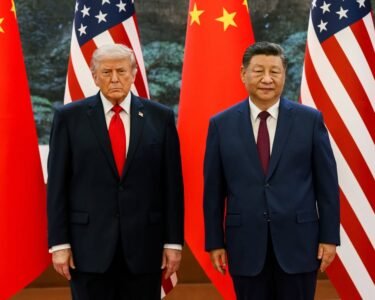
U.S. President Donald Trump confirmed that the U.S. blockade of Iranian ports “will remain in full force” until Tehran reaches a deal with the United States, including on its nuclear program.
The demands go further than just geopolitical leverage. Trump said the U.S. will go into Iran and “get all the nuclear dust,” referring to approximately 970 pounds (440 kilograms) of enriched uranium believed to be buried under nuclear sites badly damaged by U.S. military strikes last year.
Iran has refused. Iranian Deputy Foreign Minister Saeed Khatibzadeh told the Associated Press in Antalya, Turkey, that Tehran is not prepared for a new round of face-to-face talks because the Americans “have not abandoned their maximalist position.”
The stand-off now centers on two core issues: the U.S. blockade of Iranian ports and control over Iran’s enriched uranium stockpile. Neither side has shown signs of backing down on either front.
The Ceasefire, the Casualties, and the Bigger War
The crisis over the Strait of Hormuz is unfolding inside a broader regional conflict that has already claimed thousands of lives.
The fighting has killed at least 3,000 people in Iran, nearly 2,300 in Lebanon, 23 in Israel, and more than a dozen in Gulf Arab states. Thirteen U.S. service members have also been killed.
On the Lebanon front, a fragile ceasefire is holding — for now. A 10-day truce between Israel and the Iranian-backed Hezbollah militant group in Lebanon appeared to hold as of Friday, April 18, 2026.
Lebanese President Joseph Aoun and Prime Minister Nawaf Salam met to discuss Lebanon’s “readiness for negotiations” with Israel, according to a statement from the president’s office. Lebanon and Israel have been in a formal state of war since 1948.
U.S. President Trump has invited both Lebanese President Aoun and Israeli Prime Minister Benjamin Netanyahu to the White House, though no date has been announced.
The ceasefire on the Lebanon-Israel border does not extend to the Iran-U.S. standoff — and the blockade of Iranian ports, combined with the re-closure of the strait, suggests the wider conflict remains dangerously unresolved.
Iran’s Airspace: A Small Step Toward Normalcy
Amid the escalation over the Strait of Hormuz, one small signal of de-escalation emerged elsewhere.
Iran announced a partial reopening of its airspace on Saturday after a seven-week shutdown caused by the war. The Civil Aviation Organization said air routes over eastern Iran were reopened at 7 a.m. local time, with flights at Iranian airports expected to gradually resume, though no firm timeline was provided.
Iran’s airspace had been closed since the United States and Israel began striking Iranian targets on February 28.
The reopening of airspace, even partially, is being read by some analysts as a signal that Iran is not entirely opposed to a negotiated off-ramp — even as it tightens its grip on the strait.
Pakistan’s Role in U.S.-Iran Diplomacy
With direct talks stalled, Pakistan has stepped into a key mediating role between Washington and Tehran.
Pakistani Prime Minister Shehbaz Sharif traveled to Antalya, Turkey, where he met Turkish President Recep Tayyip Erdogan and Qatari Emir Sheikh Tamim bin Hamad Al Thani to discuss diplomatic efforts between Iran and the United States ahead of an April 22 ceasefire deadline.
Pakistan is not just playing a political role. Its military leadership has also engaged directly with Tehran. Pakistani Field Marshal Asim Munir concluded a visit to Tehran, meeting Iranian President Masoud Pezeshkian, Parliament Speaker Bagher Qalibaf, Foreign Minister Abbas Araghchi, and senior military officials. Discussions focused on regional security and steps toward a negotiated settlement.
Pakistan is expected to host the second round of U.S.-Iran talks early next week.
Pakistani officials say both sides are still moving closer to an agreement, despite the current escalation over the Strait of Hormuz and the ongoing U.S. blockade.
What Happens Next?
The next 72 hours will be decisive. The April 22 ceasefire deadline is approaching fast, and both sides are under pressure to either move toward a deal or risk a further escalation that could permanently destabilize global oil markets.
Iran has demonstrated it is willing to use the strait as leverage. The U.S. has demonstrated it is unwilling to back down on either the blockade or the nuclear demands.
With Pakistan hosting the next round of talks and Qatar and Turkey playing active diplomatic roles, there remains a narrow diplomatic window. But that window is closing.
The Strait of Hormuz crisis is no longer a distant geopolitical flashpoint — it is a real-time test of whether diplomacy can prevent a broader energy and military catastrophe.
Follow the latest developments on the Iran-U.S. standoff, the Strait of Hormuz, and global oil markets as talks head into a critical final stretch before the April 22 deadline.
Hashtags: #StraitOfHormuz #USBlockade #IranUSWar #GlobalOilCrisis #IranNuclearDeal