 By
By The Internet of Things is no longer a future concept — it is reshaping technology right now. From hospital rooms to factory floors, billions of connected devices are collecting data, automating decisions, and changing how industries operate. Understanding what IoT is and why it matters has become essential for businesses, consumers, and policymakers alike.
What Is the Internet of Things?
The Internet of Things refers to a network of physical devices, vehicles, appliances, and other objects embedded with sensors, software, and network connectivity. These smart devices collect and share data with each other and with cloud-based systems — often without any human input.
IoT devices range from simple smart thermostats and wearable fitness trackers to complex industrial machinery and entire connected transportation networks. Technologists are even designing full-scale smart cities built on IoT infrastructure.
What makes IoT powerful is its ability to bridge the physical and digital worlds. A temperature sensor in a warehouse can automatically alert a logistics manager. A wearable device can transmit a patient’s heart rate directly to a physician. These are not hypothetical — they are happening today.
Why IoT Matters for Business and Technology?
The value of the Internet of Things for modern technology and business is substantial — and it goes beyond convenience.
Improved efficiency is one of the most immediate benefits. IoT sensors monitor equipment in real time, detecting performance issues before they cause downtime. This reduces maintenance costs and keeps operations running smoothly.
Data-driven decision-making is another major advantage. Connected devices generate enormous volumes of data that organizations can analyze to spot trends, understand customer behavior, and sharpen their strategy. Businesses that tap into this data gain a measurable competitive edge.
Cost reduction follows naturally. Automating repetitive tasks — such as monitoring energy usage or managing inventory levels — cuts labor costs and reduces human error. IoT-enabled energy optimization alone can deliver significant savings in large facilities.
Enhanced customer experience rounds out the core value proposition. Retailers, for example, can use IoT sensors to track in-store foot traffic and serve personalized offers based on real shopper behavior, not assumptions.
The Technologies Powering IoT
The Internet of Things does not run on a single technology. It is a combination of several layers working in concert.
Sensors and actuators sit at the foundation. Sensors detect environmental changes — temperature, pressure, motion, humidity — while actuators respond by triggering physical actions like opening a valve or switching on a motor.
Connectivity technologies link devices to the internet. Depending on the use case, this can involve Wi-Fi, Bluetooth, cellular networks, Zigbee, or LoRaWAN — each suited for different ranges, power requirements, and data volumes.
Cloud computing provides the infrastructure to store, process, and analyze the data these devices generate. Without scalable cloud platforms, managing IoT data at scale would be impractical.
Big data analytics and machine learning transform raw data into actionable intelligence. Advanced algorithms identify patterns and anomalies that would be impossible to detect manually.
Security and privacy technologies — including encryption, authentication systems, and intrusion detection — protect both the devices and the sensitive data they handle. As IoT deployments expand, this layer becomes more critical, not less.
7 Key Industries Where IoT Is Making an Impact
1. Healthcare
IoT devices remotely monitor patients’ vital signs — heart rate, blood pressure, oxygen saturation — and flag anomalies in real time. This enables early intervention and reduces unnecessary hospital visits. IoT also tracks medical equipment, manages inventory, and monitors medication compliance.
2. Manufacturing
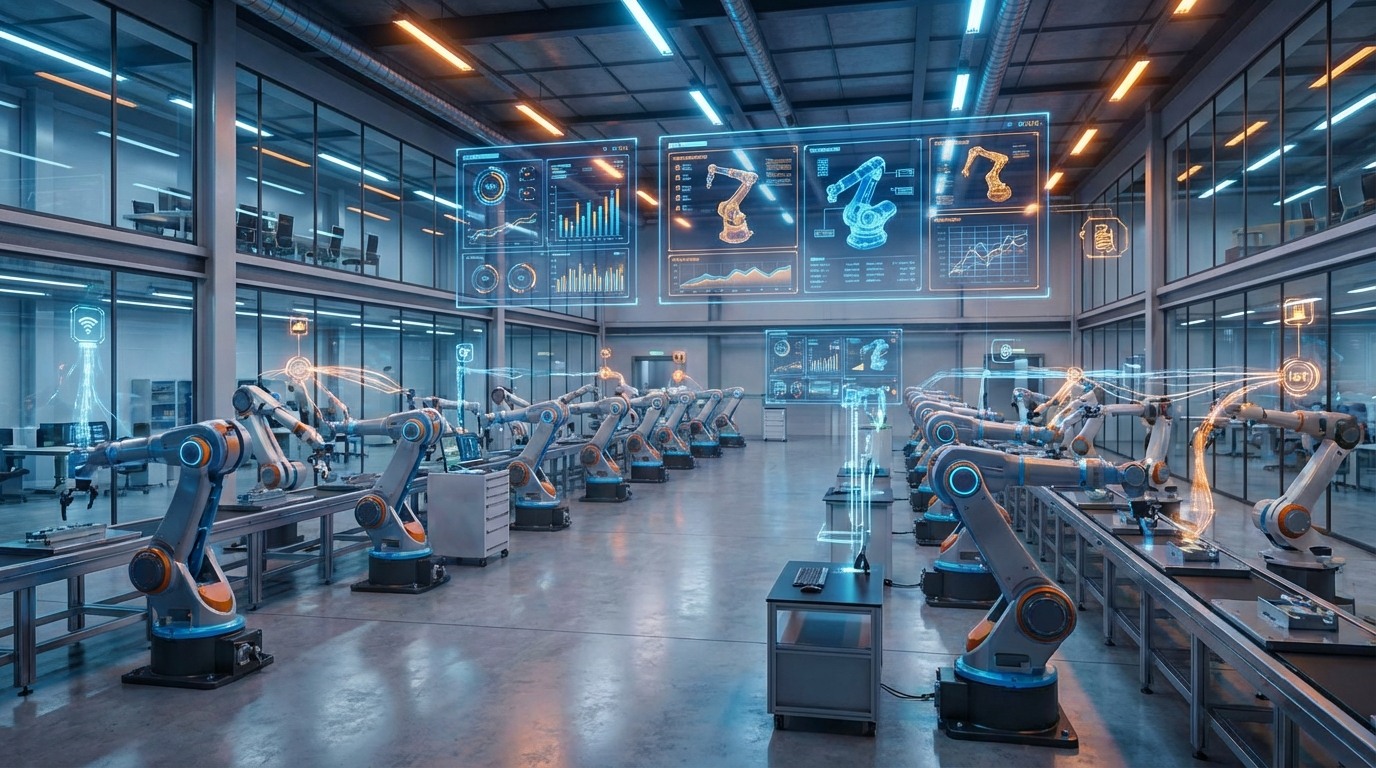
Industrial IoT (IIoT) sensors monitor machine temperatures, detect mechanical failures before they occur, and optimize production line output. Connected factories reduce unplanned downtime, improve quality control, and enable smarter supply chain management.
3. Retail
Retailers use IoT sensors to analyze customer movement patterns, monitor stock levels in real time, and streamline checkout processes. The result is better store layouts, reduced out-of-stock situations, and more targeted promotions.
4. Agriculture
Smart agriculture uses IoT to measure soil moisture, monitor weather conditions, and optimize irrigation schedules automatically. Livestock health monitoring and remote equipment tracking are also expanding across farms that previously had minimal digital infrastructure.
5. Transportation
IoT sensors in connected vehicles monitor fuel efficiency, engine performance, and cargo condition. Fleet managers can optimize routes in real time, cut fuel costs, and ensure shipments arrive in peak condition.
6. Energy and Utilities
Smart grids use IoT to balance electricity supply and demand dynamically. Smart meters give consumers and utility companies real-time visibility into energy consumption, reducing waste and improving grid reliability.
7. Smart Cities
City governments are deploying IoT across traffic systems, waste management, public lighting, and water infrastructure. Real-time data from connected devices enables faster response to urban challenges and more efficient use of public resources.
Risks and Challenges You Cannot Ignore
The Internet of Things brings real benefits — but also real risks. Businesses and technology leaders need to approach IoT with clear eyes.
Security vulnerabilities remain the most pressing concern. Many IoT devices ship with weak default credentials, infrequent firmware updates, and limited built-in security. A compromised device can become an entry point into broader organizational networks.
Interoperability issues complicate large-scale deployments. Devices from different manufacturers often use incompatible standards and communication protocols, creating data silos and integration headaches.
Data overload is a growing operational challenge. IoT systems generate staggering volumes of data. Without the right analytics infrastructure in place, organizations end up with more data than they can meaningfully interpret.
Implementation costs and complexity can be barriers, particularly for small and mid-sized businesses. Building, deploying, and maintaining an IoT ecosystem requires specialized expertise and ongoing investment.
Regulatory compliance adds another layer of complexity. Data protection and privacy laws — which vary significantly across jurisdictions — apply to the data IoT devices collect and transmit. Non-compliance carries legal and reputational risk.
How Businesses Should Approach IoT Strategy
Deploying IoT without a clear strategy is a common and costly mistake. A structured approach improves outcomes significantly.
Define objectives before deploying anything. Know exactly what problem IoT is meant to solve — whether that is reducing equipment downtime, improving logistics visibility, or lowering energy costs.
Prioritize security from day one. Choose devices built with security in mind. Implement encryption, strong authentication, and regular firmware updates as standard practice, not afterthoughts.
Build a data management framework. IoT data is only valuable if it can be stored, accessed, and analyzed effectively. Invest in the analytics tools and processes needed to turn raw device data into business intelligence.
Monitor and maintain continuously. IoT systems require ongoing attention. Regular health checks, software updates, and security audits prevent degradation and reduce vulnerability exposure.
Design for interoperability. Choose platforms and devices that support open standards wherever possible. This protects future flexibility and prevents vendor lock-in.
The Future of IoT: What Comes Next
The trajectory for the Internet of Things points sharply upward. Analysts project tens of billions of connected devices operating across global networks within the next few years.
Edge computing is accelerating this growth by processing data closer to the source — on the device or nearby infrastructure rather than in a distant data center. This reduces latency, cuts bandwidth costs, and enables faster real-time responses.
Artificial intelligence integration is deepening. AI-powered IoT systems can predict equipment failures, adapt to changing conditions autonomously, and surface insights that would take human analysts days to find.
Blockchain is emerging as a tool for securing IoT data flows. Decentralized networks built on blockchain can minimize data tampering risks and improve trust between devices in shared IoT ecosystems.
Sustainability is becoming a design priority. From precision agriculture to smart energy grids, IoT is being positioned as a key tool for reducing environmental impact — aligning with corporate ESG commitments and government climate targets.
The cost of IoT hardware continues to fall, making adoption accessible to smaller businesses and developing markets. As the technology matures, the organizations that build strong IoT foundations today will be positioned to lead in the years ahead.
Stay informed on the latest developments in technology and IoT — bookmark this page and check back for updates as the connected world continues to evolve.