 By
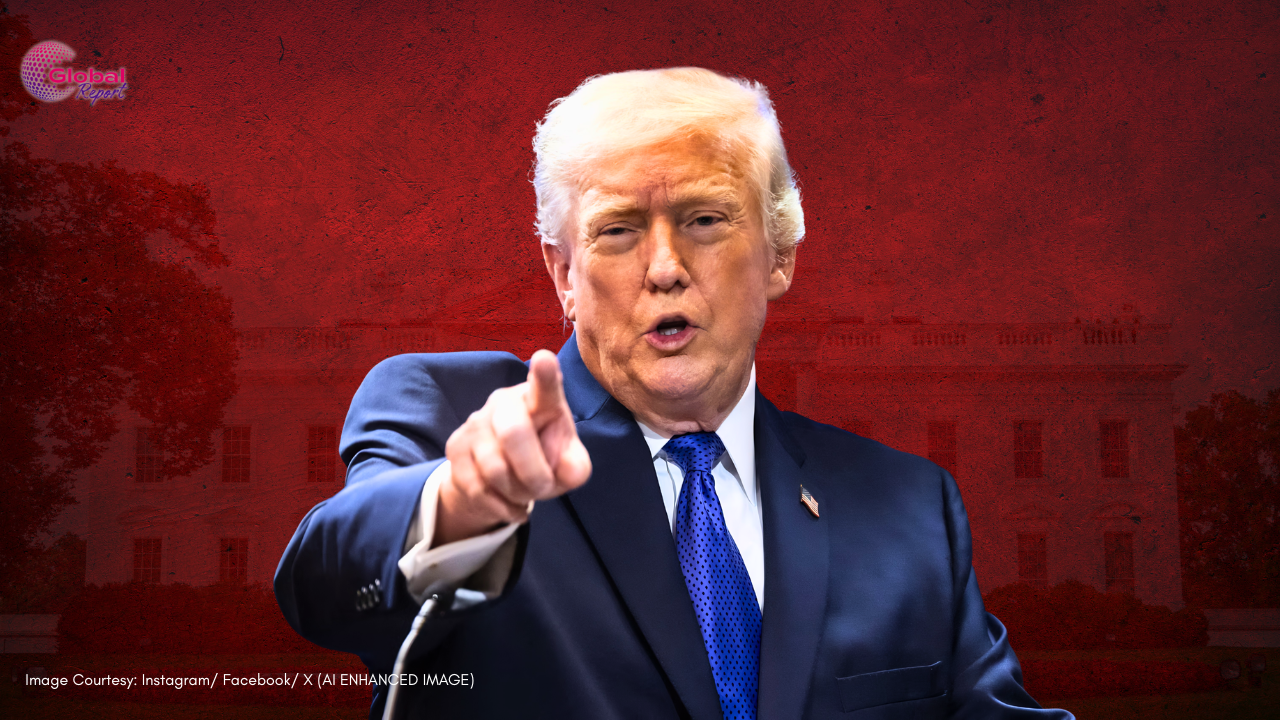
By Donald Trump declared this week that the federal government can no longer afford to fund Medicare, Medicaid, or child care programs — shifting the financial responsibility to individual states. The remarks, made during a private Easter luncheon at the White House, triggered an immediate political backlash and reignited the national debate over military spending versus domestic welfare.
At the private White House Easter luncheon on Wednesday, Donald Trump told guests he had instructed Office of Management and Budget Director Russell Vought to halt all federal child care funding.
“Don’t send any money for day care, because the United States can’t take care of day care,” Trump reportedly said. “We’re a big country. We have 50 states. We’re fighting wars. We can’t take care of day care.”
Trump went further, arguing that the federal government’s sole responsibility should be national defense. “It’s not possible for us to take care of day care, Medicaid, Medicare, all these individual things,” he said. “We have to take care of one thing: military protection. We have to guard the country.”
He also suggested that states would need to raise their own taxes to cover child care costs, though the federal government might offer minor tax relief to offset that burden.
The White House initially posted video of Trump’s remarks to its official YouTube channel — as is standard for open press events — but later deleted the footage.
The Iran War Spending Comparison
Trump’s comments landed with particular force given the scale of ongoing U.S. military expenditure. The Iran War alone cost the United States over $11.3 billion in just its first six days last month, according to Pentagon briefings to senators.
Democratic lawmakers were quick to draw a direct contrast.
Representative Ro Khanna of California pointed out that the billions spent in the Iran War could have funded $10-per-day child care for every American family, with child care workers earning $25 per hour.
Senator Andy Kim of New Jersey made a similar calculation regarding senior health care. He argued that three weeks of Iran War costs would be enough to provide vision, hearing, and dental coverage to every Medicare-enrolled senior in the country for an entire year.
The comparison framed Trump’s domestic spending decisions not as fiscal necessity, but as a deliberate set of priorities — a point Democrats intend to press heading into future budget negotiations.
White House Walks It Back — But Democrats Push Forward
After the video was deleted, White House spokesperson Olivia Wales issued a statement attempting to reframe Donald Trump’s remarks.
Wales said the president was specifically referring to eliminating fraud within Medicaid and Medicare — not eliminating the programs themselves. She pointed to Trump having signed legislation removing taxes on Social Security benefits for seniors and blocking undocumented immigrants from accessing federal health programs.
“The Trump economic agenda will continue to lower costs, making everyday life more affordable for hardworking American families,” Wales said.
However, the clarification did little to quiet critics. Trump’s own words — “It’s not possible for us to take care of day care, Medicaid, Medicare” — were already circulating widely online before the video was pulled.
The episode underscores a recurring tension in the administration’s messaging: broad anti-spending rhetoric from Trump that the communications team must subsequently narrow or walk back.
Child Care Fraud Allegations and the Minnesota Controversy
Trump also returned Wednesday to one of his administration’s recurring claims — that Democratic-led states are perpetrating widespread fraud in federally funded child care programs.
He alleged that in Minnesota and Los Angeles, there are more registered child care centers than there are children. “Of the 700 that they looked at in Minnesota, there were not one that was a day care center,” Trump claimed.
These allegations have a history. In December, the administration targeted Minnesota following claims made by conservative influencers on social media. A subsequent review by Minnesota’s Department of Children, Youth, and Families found that the child care centers in question were operating normally and legitimately.
Despite that finding, the Department of Health and Human Services froze child care and family assistance funds in January for five Democratic-led states: California, Colorado, Illinois, Minnesota, and New York — citing unverified fraud concerns.
Trump did not limit the fraud accusations to Democrats. He acknowledged that Republican-led states are likely engaged in similar practices, saying they “have to compete” with what Democratic states are doing.
Vice President JD Vance has been appointed to lead the administration’s anti-fraud efforts. Last week, Vance chaired the first meeting of the White House’s new anti-fraud task force, and on Wednesday, Colin McDonald was sworn in as Assistant Attorney General for National Fraud Enforcement.
What This Means for American Families
Federally subsidized child care currently reaches millions of low-income families through programs like the Child Care and Development Block Grant and Temporary Assistance for Needy Families. If federal support is withdrawn, states would face an immediate funding gap with no guaranteed replacement.
Many states — particularly those with lower tax revenues — would be unable to absorb the cost without raising taxes significantly or cutting program access. This could mean reduced eligibility thresholds, longer waitlists, or outright termination of subsidies in some states.
For Medicaid, the stakes are higher still. The program covers over 80 million Americans, including low-income adults, children, pregnant women, elderly people, and individuals with disabilities. Any shift of full Medicaid financing to states would represent one of the largest restructurings of American social policy in decades.
Senator Patty Murray and Representative Katherine Clark had introduced legislation last year to cap child care costs at 7% of household income and expand early education access nationally. That legislation now faces a far more hostile political climate.
Conclusion
Donald Trump’s Easter luncheon remarks have opened a new front in the ongoing battle over federal spending priorities. By explicitly stating that Medicaid, Medicare, and child care cannot be funded at the federal level — while the Iran War consumes billions — the administration has handed Democrats a sharp political contrast heading into the next budget cycle.
Whether Trump’s comments reflect a firm policy direction or rhetorical excess remains to be seen. What is clear is that American families dependent on these programs cannot afford to wait for that answer.
📢 Follow the latest on federal budget and global policy decisions — bookmark this page and stay informed.