 By
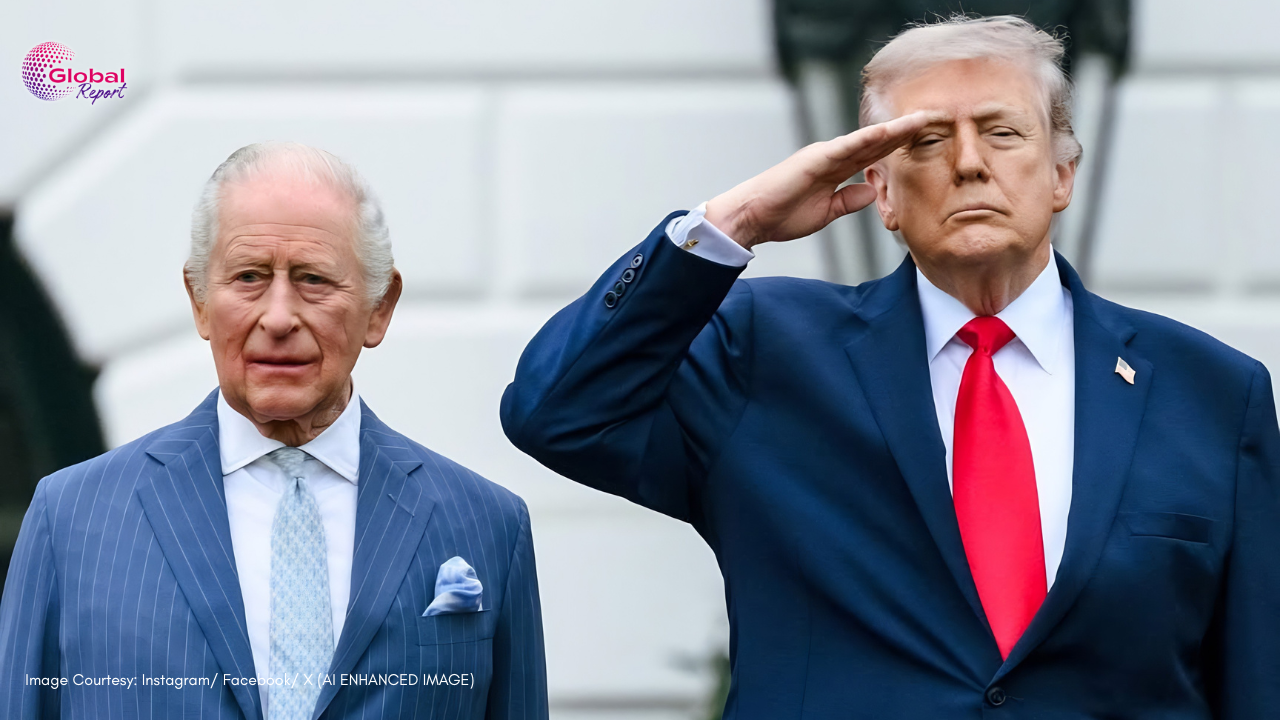
By King Charles brought the house down at the White House state dinner on Tuesday, April 28, 2026, delivering sharp wit alongside serious diplomacy as he and Queen Camilla joined Donald Trump and First Lady Melania Trump for one of the most high-profile royal visits in recent memory.
The British monarch’s most quoted line of the evening came in direct response to a comment Donald Trump had made months earlier — and it landed with a room full of powerful guests laughing in the East Room of the White House.
Joke That Stopped the Room
King Charles III brought a notably jovial tone to the state dinner, joking that President Trump “would be speaking French” if it were not for the United Kingdom.
The quip was a direct — and clever — rebuttal to something Trump had said in January. Earlier this year, Trump had told European leaders they would be speaking German if not for the United States, referencing American intervention in World War II.
Charles flipped the script at the dinner table. He told Trump and fellow attendees: “You recently commented, Mr. President, that if it were not for the United States, European countries would be speaking German.” Then, with a smile: “Dare I say that, if it wasn’t for us, you’d be speaking French…!”
The room erupted. Trump laughed. The moment was immediately captured by pool cameras and began circulating on social media within minutes.
King Charles and the Colonial History Comeback
The “speaking French” joke was not just a throwaway one-liner. It carried genuine historical weight, and Charles clearly knew it.
The comment references the French and Indian War (1754–1763), the conflict in which Britain — not yet divided from its American colonies — defeated France for control of North America. Had Britain lost that war, the eastern seaboard of what is now the United States would likely have fallen under French colonial rule.
In other words, King Charles was pointing out that British military victories on American soil, over a century before the U.S. even existed as a nation, helped shape the English-speaking America that exists today. It was historically accurate — and perfectly timed.
The exchange highlighted something rarely seen in modern royal diplomacy: a reigning monarch openly trading geopolitical barbs with a sitting U.S. president, and getting laughs for it.
View this post on Instagram
The White House Burning — Another Sharp Quip
The French-language joke was not the only moment of royal wit at the dinner. King Charles also joked about Donald Trump’s controversial renovation project in the White House’s East Wing, saying: “I cannot help noticing the readjustments to the East Wing, Mr. President.” He then added: “I’m sorry to say that we British, of course, made our own small attempt at real estate development of the White House in 1814.”
That was a reference to the War of 1812, when British troops marched into Washington, D.C., and set fire to the White House — one of the most dramatic events in the history of U.S.-British relations.
The ability to make that joke — in the White House itself, with the American president laughing beside him — underscored the unique nature of the so-called “Special Relationship” between the two nations. History, however dark, can be shared and even laughed about when the alliance is strong enough.
Historic Speech to Congress Earlier That Day
The dinner jokes grabbed headlines, but King Charles’s day had already made history long before the first course was served.
Hours before the state dinner, Charles made history by becoming only the second British monarch in history to address the United States Congress, following in the footsteps of his late mother, Queen Elizabeth.
Tuesday’s address was delivered as part of a state visit tied to the ongoing celebration of the 250th anniversary of U.S. independence from Great Britain.
King Charles kicked off his speech by thanking the American people “for welcoming us to the United States to mark this semi-quincentennial year of the Declaration of Independence,” and received a standing ovation.
His address covered serious ground. Charles argued for stronger international cooperation, indirectly pushing back on Trump’s criticism of NATO, and explicitly advocated for U.S. support of Ukraine — remarks that earned a bipartisan standing ovation, despite ongoing Republican debate over military aid.
The King also received applause from both sides of the aisle when he noted that “executive power is subject to checks and balances” — a line rooted in his reference to Magna Carta’s influence on the U.S. Supreme Court.
Charles also addressed the White House Correspondents’ Dinner shooting that had taken place the previous weekend, stating: “Such acts of violence will never succeed.” He added: “Whatever our differences, whatever disagreements we may have, we stand united in our commitment to uphold democracy.”
The Bigger Picture: US-UK Relations Under Strain
Behind the warm smiles, toasts, and dinner jokes, the state visit was unfolding against a more complicated diplomatic backdrop.
The visit came during a tense geopolitical moment. The U.S.-Israeli war with Iran has placed additional strain on Trump’s already turbulent relationship with European leaders, who have declined to participate more fully in the conflict. On multiple occasions, Trump has criticized the UK for not joining the U.S. and Israel in their war in Iran, and has at various points mocked and insulted Prime Minister Keir Starmer.
Relations between the two nations are at an unusually low ebb. The British monarch, as head of state rather than head of government, carried a unique diplomatic value — one that Prime Minister Starmer could not replicate at a dinner table.
Before the state dinner, King Charles met with a group of prominent tech leaders at Blair House, including Amazon founder Jeff Bezos, Apple CEO Tim Cook, NVIDIA founder Jensen Huang, Google President Ruth Porat, and Salesforce CEO Marc Benioff. The meeting touched on UK investments, AI guardrails, and the importance of startup funding.
The combination of high-level diplomacy, business engagement, and crowd-pleasing humor demonstrated how skillfully the monarchy can operate as a soft-power instrument — particularly in moments when government-to-government relationships are tense.
What King Charles’s Visit Means for the Special Relationship
A Monarchy as Diplomatic Bridge
King Charles’s state visit was about far more than a dinner and a speech. It was a calculated deployment of Britain’s most powerful non-political asset — the Crown — at a moment when political channels between London and Washington are strained.
The monarchy carries no legislative power and takes no partisan positions. That neutrality is precisely what makes it valuable. Where Prime Minister Starmer faces hostility from Trump over Iran, King Charles can walk into the East Room, crack a joke about speaking French, and still walk out having advanced British interests.
The 250th Anniversary as Historical Frame
The timing of the visit was also deliberate. The trip was framed around the 250th anniversary of U.S. independence. That framing allowed both sides to emphasize shared history — rather than current disagreements — as the anchor of the relationship.
Trump himself acknowledged the significance of the moment, noting that “the direct descendant of King George III” would speak “to the direct successor of the very body that gathered in Independence Hall on July 4, 1776,” and saying that the founding fathers might be “absolutely shocked” at the sight.
New York and the 9/11 Memorial
Following the Washington events, King Charles and Queen Camilla traveled to New York City, where they visited the 9/11 Memorial at One World Trade Center alongside New York Mayor Zohran Mamdani, marking the 25th anniversary of the September 11 attacks. They also met serving first responders and families of victims.
The New York stop reinforced the visit’s core message: that the US-UK bond is rooted in shared sacrifice, shared values, and, occasionally, a shared sense of humor.
Frequently Asked Questions
Q: What did King Charles say to Donald Trump at the White House state dinner? A: King Charles joked that if it were not for Britain, Trump would be speaking French — a witty historical comeback to Trump’s earlier claim that Europeans would be speaking German without U.S. intervention in World War II. The remark drew laughter from the room, including from Trump himself.
Q: Was King Charles’s speech to Congress a historic first? A: It was a historic second. King Charles became only the second British monarch to address a joint session of the U.S. Congress. His mother, Queen Elizabeth II, was the first. The speech covered NATO, Ukraine, and the shared democratic values of both nations.
Q: Why did King Charles visit the United States in April 2026? A: The four-day state visit was tied to the 250th anniversary of U.S. independence from Great Britain. It included meetings with President Trump, a speech to Congress, a White House state dinner, and a visit to the 9/11 Memorial in New York City.
Q: How did Donald Trump respond to King Charles’s jokes at the dinner? A: Trump laughed at Charles’s remarks and praised the King’s earlier Congressional address, calling it a “great speech.” He jokingly added he was “very jealous” of the reception Charles received.
Q: What is the current state of US-UK relations? A: Relations between the two nations are under notable strain, primarily due to the UK’s refusal to join the U.S. and Israel in their military conflict with Iran. Trump has been publicly critical of Prime Minister Keir Starmer. The royal state visit was partly seen as an effort to strengthen ties through diplomatic and cultural channels outside the political sphere.
King Charles delivered one of the most talked-about moments of his state visit with a single, well-placed joke at Donald Trump’s expense — and pulled it off with the kind of timing that even seasoned diplomats rarely achieve. The “speaking French” line was funny, historically grounded, and politically deft, landing in a room full of powerful guests at a moment when the US-UK relationship needs every boost it can get.
His Congressional address, his tech-leader meetings, and his visit to the 9/11 Memorial rounded out a state visit that balanced ceremony with substance. Whether any of it shifts the harder political realities between Washington and London remains to be seen — but King Charles made a strong case that the Special Relationship still has something special left in it.
Follow developments in US-UK diplomacy as King Charles and Queen Camilla conclude their four-day state visit.