
 By
By The third round of US-Iran face-to-face negotiations ended without a peace deal on Sunday, April 13, 2026, after 21 exhausting hours of talks in Islamabad, Pakistan. US Vice President JD Vance confirmed the breakdown, citing Iran’s refusal to commit to abandoning its nuclear weapons ambitions as the central obstacle.The collapse marks a significant setback in what was already a historically rare diplomatic effort — the most direct high-level contact between Washington and Tehran in decades.
Delegations from the United States and Iran convened in Pakistan’s capital for their third round of direct talks since the war began on February 28, 2026. The session stretched through the night and into the early hours of Sunday morning, lasting 21 hours in total.
Pakistan played the role of host and facilitator — a neutral ground for two nations that have not maintained formal diplomatic relations since 1980. Senior officials from China, Egypt, Saudi Arabia, and Qatar were also present in Islamabad, working behind the scenes to keep dialogue alive.
Despite the international pressure and the high-stakes setting, negotiators failed to bridge the gap. The US-Iran divide proved too deep for a single marathon session to resolve.
JD Vance Lays Out America’s Core Demand
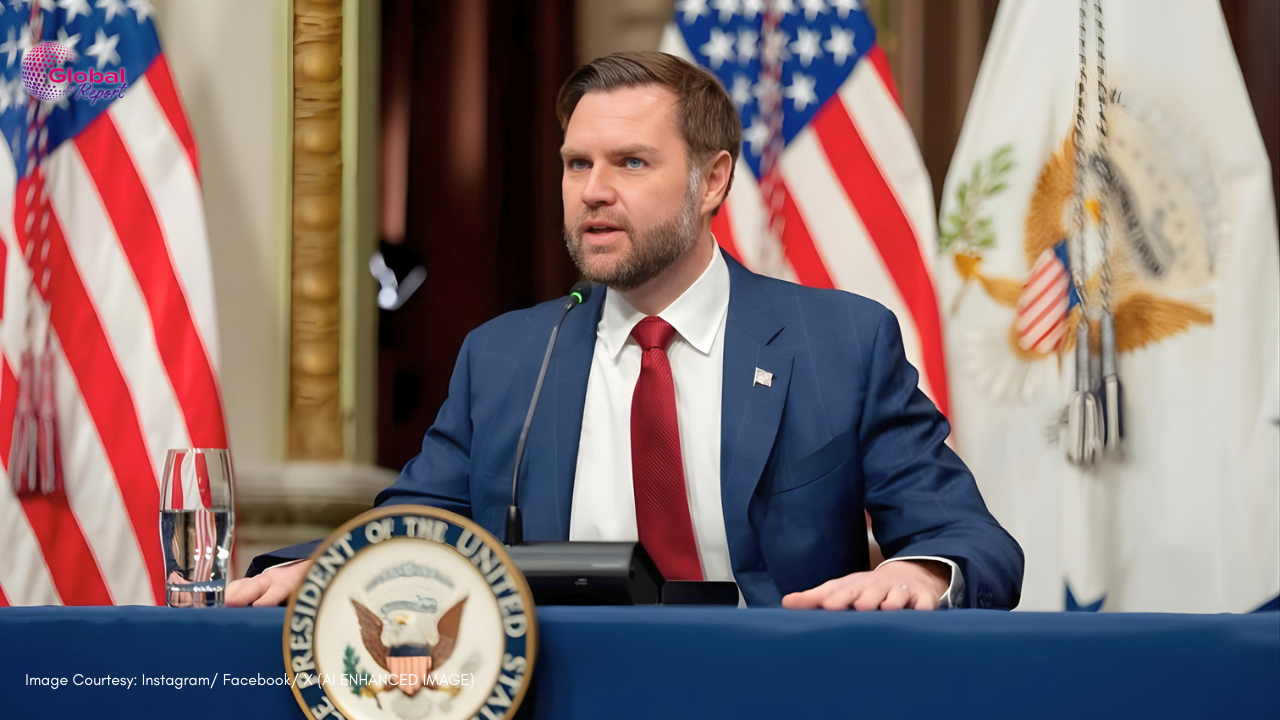
JD Vance, leading the American delegation alongside special envoys Steve Witkoff and Jared Kushner, addressed reporters following the breakdown. His statement was direct and unambiguous.
“The simple fact is that we need to see an affirmative commitment that they will not seek a nuclear weapon, and they will not seek the tools that would enable them to quickly achieve a nuclear weapon,” Vance said. “That is the core goal of the president of the United States.”
Vance confirmed he was in near-constant contact with President Donald Trump throughout the negotiations — speaking with him approximately six to twelve times over the 21-hour session. He also coordinated closely with Secretary of State Marco Rubio, Treasury Secretary Scott Bessent, and US Central Command chief Admiral Brad Cooper.
Despite the failure to reach an agreement, Vance characterized the American approach as a good-faith effort. He said the US had submitted what he described as a “final and best offer” — a method of understanding — and left it on the table for Iran to accept.
“We leave here with a very simple proposal,” Vance said. “We’ll see if the Iranians accept it.”
Vance’s presence at these negotiations was notable in itself. He has been described as a reluctant defender of the war, carrying little prior diplomatic experience. His counterpart, Iranian Parliament Speaker Mohammad Bagher Qalibaf, is a former commander in Iran’s powerful Revolutionary Guard — a man known for issuing some of the war’s most hardline statements.
The contrast between the two men illustrated the wider gap between the two governments’ positions.
Iran’s Red Lines and Counteroffer
Iran arrived at the Islamabad talks with firm preconditions and a 10-point proposal of its own. Iranian state media reported that discussions only commenced after certain Iranian preconditions were met — specifically, a reduction in Israeli strikes on southern Lebanon.
Iran’s delegation presented what it called non-negotiable “red lines” to Pakistani Prime Minister Shehbaz Sharif. These included:
- Compensation for damage caused by US-Israeli strikes that launched the war
- Release of Iran’s frozen assets held in international accounts
- A guaranteed end to the war with assurances of no future military action
- Control over the Strait of Hormuz, a critical chokepoint for global energy trade
- A halt to Israeli strikes on Hezbollah in Lebanon
The American 15-point counterproposal took a fundamentally different approach. It called for restrictions on Iran’s nuclear program and the reopening of the Strait of Hormuz — two demands that struck at the heart of Iran’s key strategic advantages.
Iranian Foreign Minister Abbas Araghchi, who was part of Iran’s delegation, set the tone before talks began. He said Tehran was entering negotiations with “deep distrust” after US strikes occurred during a previous round of discussions. Araghchi also made clear that Iran would retaliate if attacked again during the talks.
Iranian state television acknowledged “serious” differences between the two sides — an understatement that proved accurate.
The Strait of Hormuz: War’s Biggest Wildcard
One of the most consequential dimensions of the US-Iran standoff is Iran’s control over the Strait of Hormuz — a narrow waterway through which roughly 20% of the world’s traded oil typically flows.
Since the war began, Iran’s grip on the strait has effectively cut off Persian Gulf oil and gas exports from the global economy, sending energy prices sharply higher.
President Trump addressed this directly while talks were still ongoing, posting on social media that the US had begun “clearing out” the strait. US Central Command’s Admiral Brad Cooper confirmed that American destroyers had transited the strait, with underwater drones and additional naval assets set to follow.
“We’re sweeping the strait. Whether we make a deal or not makes no difference to me,” Trump told journalists.
Iran’s joint military command disputed the American account, denying that the destroyers had passed through. The competing claims added another layer of tension to an already fragile situation.
The strait remains the war’s most significant economic pressure point. Its reopening is central to any meaningful US-Iran agreement — and a critical benchmark for global markets watching the conflict closely.
The Human Cost of the Conflict
The US-Iran war, now entering its seventh week, has left a trail of destruction across the Middle East. According to figures cited by AP:
- At least 3,000 people killed in Iran
- Over 2,020 killed in Lebanon
- 23 killed in Israel
- More than a dozen deaths in Gulf Arab states
Lebanon’s health ministry confirmed that the country’s death toll has surpassed 2,000, with Hezbollah’s involvement having drawn Israel into a parallel military campaign there. On the day the Iran ceasefire was announced, Israeli airstrikes on Beirut killed more than 300 people in the single deadliest day of Lebanon’s portion of the war.
In Tehran, residents expressed a mixture of skepticism and fragile hope. “Peace alone is not enough for our country because we’ve been hit very hard, there have been huge costs,” said 62-year-old Amir Razzai Far, speaking to the Associated Press.
Infrastructure damage has spread across half a dozen Middle Eastern countries. Iran, a nation of approximately 93 million people, has sustained lasting harm to its urban and industrial base.
Pope Leo XIV weighed in on the conflict as well, publicly denouncing what he called the “delusion of omnipotence” driving the war — a rare and pointed intervention from the Vatican into a geopolitical crisis.
What Comes Next for US-Iran Relations
The breakdown of talks does not necessarily mean the end of the diplomatic process — but the path forward is narrow and uncertain.
Vance indicated that a final US offer remains on the table. Two Pakistani officials, speaking anonymously, said that discussions between the heads of the delegations could resume after a break, and that technical personnel from both sides were still in contact. Whether that produces movement remains to be seen.
The ceasefire announced two weeks ago technically remains in effect, though its durability is in question. Trump said the two-week suspension of attacks would hold, but his administration gave no clear signal about what happens once that window closes.
On the Israel-Lebanon front, direct negotiations between the two countries are expected to begin Tuesday in Washington — a surprising development given that Israel and Lebanon have no formal diplomatic relations. However, Lebanon’s Prime Minister Nawaf Salam postponed a planned trip to Washington, citing internal political pressures. A first round of talks at the ambassadorial level is still expected to proceed.
The US-Iran crisis has already redrawn diplomatic maps across the region. It has produced the most direct American-Iranian contact since President Barack Obama’s 2013 phone call with President Hassan Rouhani — an early step that eventually led to the 2015 Iran nuclear deal after more than a year of negotiations.
That process took many months. If the current talks are to succeed, history suggests the road ahead is long — and the margin for error is dangerously thin.
Follow developments in the US-Iran negotiations as the diplomatic situation continues to evolve.


