
 By
By Iran’s foreign minister has issued a stark warning: continued US-Israeli strikes on the Bushehr nuclear power plant could trigger a catastrophic radioactive fallout that would devastate Gulf capitals — not Tehran. The warning came after the fourth confirmed attack near the facility on Saturday, April 5, 2026.
The Fourth Strike: What Happened at Bushehr
A projectile struck the perimeter of Iran’s Bushehr nuclear power plant on Saturday morning, according to Iranian media reports. The strike caused damage within the facility’s perimeter and resulted in one fatality. Iran’s Tasnim news agency reported that the projectile hit the plant’s perimeter fence, with the resulting blast and shrapnel killing one staff member.
However, the main sections of the nuclear facility were not affected by the strike. This was not an isolated incident. Iran’s Foreign Minister Abbas Araghchi claimed it was the fourth attack near the Bushehr nuclear plant since the war erupted on February 28.
Iran’s Warning: Radioactive Fallout and the GCC
Iran’s top diplomat did not mince words after the latest strike. Foreign Minister Abbas Araghchi warned in a Saturday post on his X account that a renewed attack on the Bushehr nuclear power plant, located on the Persian Gulf coast in southwest Iran, could lead to a radioactive fallout endangering life in the entire region.
Araghchi stated: “Israel-US have bombed our Bushehr plant four times now. Radioactive fallout will end life in GCC capitals, not Tehran. Attacks on our petrochemicals also convey real objectives.”
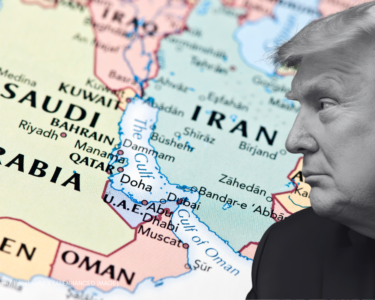
The warning carries serious geographic weight. Bushehr is considerably closer to Kuwait, Bahrain, and Qatar than it is to the Iranian capital. In other words, a worst-case nuclear event would likely hit Iran’s neighbours hardest.
IAEA Responds: No Radiation Spike — But Deep Concern Remains
The international nuclear watchdog moved quickly to assess the situation. The International Atomic Energy Agency, citing confirmation from Iranian authorities, said in a statement that there was “no increase in radiation levels” after Saturday’s attack.
However, the IAEA’s overall position on Bushehr is far from reassuring. IAEA Director General Rafael Grossi said that a direct hit to Bushehr, which is monitored by the agency, would result in a “very high release of radioactivity to the environment.” He added that Bushehr contains “thousands of kilogrammes of nuclear material.”
Grossi voiced “deep concern” at the strike, which he described as the fourth such incident in recent weeks. The IAEA chief has consistently demanded maximum military restraint from both the US and Israel as strikes near the facility have continued.
What a Direct Hit on Bushehr Could Actually Mean
The stakes of a full strike on the reactor are difficult to overstate. In a worst-case scenario, a direct hit would require evacuation orders to be issued for areas within several hundred kilometres of the plant, including population centres in other Gulf countries. Authorities would need to administer iodine to populations and potentially restrict food supplies, with subsequent radiation monitoring covering distances of several hundred kilometres.
A direct hit or destruction of powerlines could trigger a meltdown, releasing iodine-131 and cesium-137 likely throughout Iran and to nearby Gulf states, potentially even compromising desalination infrastructure in Kuwait, Qatar, and the United Arab Emirates.
Richard Wakeford, honorary professor of epidemiology at the University of Manchester, noted that the effects of an attack on a nuclear power plant depend on the scale of the damage and release of radioactive material, adding that other circumstances such as wind speed and direction also play a role.
Russia Evacuates Staff Amid Escalating Strikes
Russia has been quietly withdrawing its personnel from the Bushehr plant as the conflict deepens. Russia’s state nuclear company Rosatom, which identified the killed guard as an Iranian national, has been evacuating staff from the plant since the Iran war broke out at the end of February. Saturday’s evacuations had been planned before the attack.
Alexei Likhachev, head of Rosatom, confirmed: “As planned, we began the main wave of evacuations today, about 20 minutes after the ill-fated strike. Buses departed from the Bushehr station toward the Iranian-Armenian border — 198 people, to be exact, the largest wave of evacuation.”
The Kan public broadcaster reported that senior IDF officials coordinated with senior Russian figures on Saturday’s evacuation of 198 workers. Russia, despite its broader geopolitical alignment with Iran, appears to be managing the situation pragmatically to protect its own nationals.
Iran Accuses West of Double Standards
Iran’s foreign minister drew an explicit comparison between Western reactions to strikes near Ukraine’s nuclear facilities and the near-silence over Bushehr. Araghchi criticised the silence and inaction of Western governments in condemning the attacks on Iran’s nuclear facilities, drawing a parallel to the situation near Ukraine’s Zaporizhzhia Nuclear Power Plant in 2022.
Araghchi slammed Western “double standards,” pointing to the stark difference in reactions between hostilities near Ukraine’s Zaporizhzhia facility and the repeated strikes near Bushehr.
The comparison resonated widely. When Russian forces operated near Zaporizhzhia in 2022, Western governments and media sounded alarms loudly and repeatedly. Iran argues it deserves the same level of international concern — and is not receiving it.
Petrochemical Attacks and the Broader War Strategy
Saturday’s strikes extended well beyond the nuclear plant. At least two petrochemical facilities were hit by the US and Israel in southern Iran’s Khuzestan province, an important energy hub. At least five people were injured. The state-run Bandar Imam petrochemical complex, which produces liquefied petroleum gas and chemicals, sustained damage.
Araghchi argued these attacks expose the real objectives of the campaign. He said such attacks reveal the true nature of the US-Israeli aggression — aimed at weakening Iran’s economic and civilian capabilities as a developing country.
The United States and Israel have continued to launch air strikes on Iran’s economic facilities, including bridges, steel mills, and other factories, as part of an ongoing conflict that began in late February.
Regional Stakes: Water, Desalination, and Survival
The potential radioactive fallout from a direct hit on Bushehr poses a threat that goes beyond human casualties — it could cripple the basic water supply of entire nations. A strike on Bushehr would contaminate a critical source of desalinated potable water for Gulf countries, including Qatar. Qatar and Bahrain are 100 percent reliant on desalinated water for drinking water.
Qatar’s Prime Minister Sheikh Mohammed bin Abdulrahman bin Jassim Al Thani revealed during an interview that Qatar had conducted simulations of an attack on Bushehr. The simulations found that an attack on the plant would leave the Gulf entirely contaminated, and Qatar would “run out of water in three days.”
The UAE is also heavily reliant on desalinated water, which accounts for more than 80 percent of its drinking supply. For these nations, a radioactive event near Bushehr is not just a political crisis — it is an existential one.
What Happens Next
The conflict shows no signs of immediate de-escalation. Tehran has retaliated with drone and missile strikes targeting Israel, as well as Jordan, Iraq, and Gulf countries hosting US military assets.
Iran has also tightened its restrictions on the flow of energy through the Strait of Hormuz, causing international oil prices to hit record highs. Iranian authorities have indicated the measures will continue until the aggressors are fully punished.
The US Permanent Mission to the United Nations has publicly stated that attacks on the Bushehr nuclear power plant are “not out of the question,” raising the alarm further among regional governments and nuclear security experts.
The Bushehr nuclear plant now sits at the centre of one of the most dangerous flashpoints in the world. Four strikes have already occurred near its perimeter. The IAEA has confirmed no radiation increase — so far. But experts and Iran alike warn that the next miscalculation could change everything, not just for Tehran, but for every capital along the Persian Gulf.
If the international community fails to act with urgency, the cost may not be measured in politics — but in lives, water, and an uninhabitable Gulf.
Hashtags: #RadioactiveFallout #IranWar #BushehrNuclearPlant #IAEA #GulfCrisis