
 By
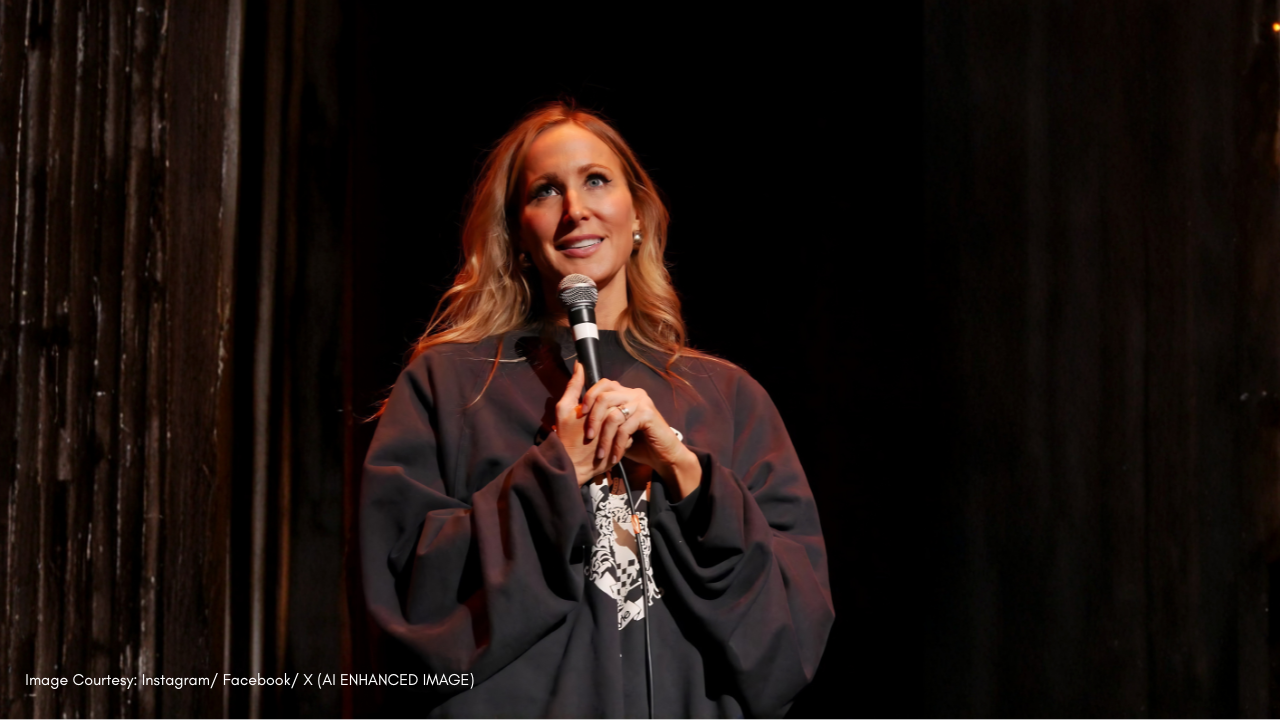
By Nikki Glaser made headlines this week after revealing she has no problem with her boyfriend hooking up with other women — as long as a few key conditions are met. The comedian and TV host, known for her sharp wit and candid personality, opened up about her relationship philosophy on the April 8 episode of Alex Cooper’s Call Her Daddy podcast, sparking both praise and backlash online.
Glaser is currently dating TV producer Chris Convy. Her comments on non-monogamy quickly went viral — and reignited a broader cultural conversation about open relationships, consent, and what it really means to trust a partner.
What Nikki Glaser Actually Said
During her Call Her Daddy appearance, Glaser was direct about her stance on physical fidelity.
“In a relationship, I don’t really care if my boyfriend were to hook up with others,” she said. She made it clear this wasn’t reluctant tolerance — she genuinely felt unbothered by the idea of her partner having a one-night physical encounter with someone else.
“I literally wouldn’t care if my husband did that,” Glaser added, emphasizing she’d only require protection be used.
The response on social media was divided. On Call Her Daddy‘s TikTok page, some viewers called her views “the saddest thing” they’d heard. Others, however, praised her for saying out loud what many people quietly practice.
View this post on Instagram
The Hooking Up Rule: Physical vs. Emotional Intimacy
Here’s where Nikki Glaser’s take gets more nuanced — and more relatable.
While she’s comfortable with the idea of her boyfriend hooking up physically with another woman, she draws a firm line at emotional intimacy. Glaser said she would actually be hurt if her boyfriend sent another woman memes or sat down to watch The Wire with her.
That distinction — physical freedom, emotional exclusivity — is actually a well-documented framework within the non-monogamy community. It reflects how different people define the boundaries of their relationships based on what matters most to them personally.
For Glaser, shared jokes and TV rituals carry more relational weight than physical encounters. That’s her version of the rules. And experts say that’s entirely valid — as long as both partners agree.
Why Open Relationships Are Going Mainstream
Nikki Glaser’s comments didn’t arrive in a vacuum. Non-monogamy is increasingly visible in pop culture, media, and dating apps.
The app Feeld, which markets itself as a platform for “the curious,” saw membership grow by 368% between 2021 and 2025, according to reporting by Wired. That’s a remarkable surge that reflects shifting attitudes — especially among younger adults — toward relationship structures outside traditional monogamy.
The Showtime documentary series Couples Therapy has featured polyamorous couples on screen. A TikTok and YouTube series called The Poly Couple, inspired by real events, has racked up millions of views and landed a new streaming deal with Electric Entertainment. TikToker @OpenlyCommitted shares her life in an open marriage to more than 225,000 followers.
This isn’t a fringe conversation anymore. It’s a mainstream one — and celebrities like Glaser are bringing it further into the spotlight.
What Experts Say About Non-Monogamy
Relationship professionals say the stigma around open relationships often comes from misunderstanding rather than evidence.
Los Angeles-based clinical psychologist Cadyn Cathers told Yahoo Life that ethical non-monogamy encompasses a wide range of arrangements. Sex isn’t always the motivating factor. Some people prioritize emotional freedom; others, like Glaser, are fine with physical openness but protective of emotional bonds.
Cathers noted that polyamorous relationships often involve more deliberate communication than conventional ones. Partners are required to explicitly define what constitutes cheating — nothing is assumed. “That actually gets discussed,” Cathers said, “therefore there is a lot less coercion that I see in polyamorous relationships.”
That level of intentionality, experts argue, can actually strengthen a partnership’s foundation rather than weaken it.
When Open Relationships Go Wrong
Not every open relationship succeeds — and experts are clear about why many fail.
Couples therapist Sheena Simpson, founder of Kodo Couples Therapy, says the most common problem is one partner entering an open arrangement out of fear rather than genuine desire. When someone agrees to non-monogamy because they’re afraid of losing the relationship, it creates an imbalanced power dynamic from the start.
“They are afraid of losing the relationship,” Simpson explained. “And that creates a power dynamic where they are coerced into this open relationship that they aren’t really ready for.”
She also flagged a second common mistake: people assuming that opening a relationship will relieve pressure. It often does the opposite.
“They’re adding complexity,” Simpson said, “and people may get scared or jealous and reactive, and they start to make rules instead of having honest conversations.”
Singer Lily Allen’s experience reflects this dynamic publicly. Her 2025 album West End Girl described an open marriage she alleges she didn’t truly want — one she felt pressured into by her then-husband, Stranger Things star David Harbour. Allen’s track “Nonmonogamummy” captured the painful gap between what one partner wanted and what the other was willing to do.
The Foundation Every Open Relationship Needs
Clinical psychologist Dr. Karen Stewart, who specializes in sex and couples therapy, says resistance to non-monogamy often comes from unfamiliarity rather than genuine moral objection.
“We don’t like things we don’t understand,” Stewart said.
She described working with a couple where the woman, significantly younger, wanted to explore an open relationship. Her partner agreed — not out of personal desire, but out of generosity. He wanted her to have experiences he had already had.
“It was coming from a more generous and loving place for him,” Stewart explained. That kind of grounded, low-pressure openness, she said, is what separates successful arrangements from damaging ones.
Stewart identified one core requirement for any open relationship to function well: the capacity to hold complexity without collapsing under it.
“You’re managing more emotions, more expectations, and then impact on other people,” she said. “The best case is a couple who is able to really hold that large container of complexity and grow within that.”
In other words, the couples most likely to thrive in open arrangements are those who are already emotionally strong — not those hoping non-monogamy will solve existing problems.
Other Celebrities Who Have Spoken Out
Nikki Glaser isn’t the only public figure wading into this conversation.
Author Lindy West recently revealed she is in a throuple with her husband Ahamefule Oluo and girlfriend Roya Amirsoleimani, a detail shared in her memoir Adult Braces. The revelation drew strong reactions — West faced accusations of being coerced into the arrangement, which she firmly denied. Critics also questioned whether her openness was consistent with her feminist writing — a charge West has pushed back against.
The contrast between Glaser’s and West’s public receptions highlights something important: society’s comfort with non-monogamy varies sharply depending on framing, gender, and context. Glaser’s casual, humor-adjacent delivery softened the reaction. West’s literary, serious framing invited more scrutiny.
Both women, however, are doing the same thing: talking openly about how they choose to structure their intimate lives. Whether that draws applause or criticism often depends less on the relationship itself and more on how the audience perceives the person speaking.
Nikki Glaser’s comments about being comfortable with her boyfriend hooking up with other women sparked debate — but they also opened a door to a more honest conversation about what modern relationships can look like.
Experts agree: ethical non-monogamy isn’t inherently harmful. When built on mutual consent, honest communication, and clear boundaries, open relationships can be just as stable and fulfilling as conventional ones. The key isn’t the structure — it’s the foundation beneath it.
As attitudes continue to shift, more couples are asking themselves what they actually want from a relationship — rather than defaulting to what they’ve been told to expect.


