 By
By Meryl Streep almost missed one of the defining roles of her career — and she planned it that way.
On April 29, 2026, speaking on NBC’s Today show alongside her The Devil Wears Prada 2 castmates Anne Hathaway, Emily Blunt, and Stanley Tucci, Streep disclosed that she turned down the original 2006 film the moment it was offered. Not out of hesitation — but out of strategy. She believed the film would be a hit, and she refused to take a cent less than she was worth.
- Year of original film: 2006
- Streep’s age at the time: 56
- Her negotiation move: Doubled her initial salary ask
- Studio’s response: Immediate agreement
- Oscar result from the film: Nominated for Best Actress
- The Devil Wears Prada 2: Released 2026, 20 years after the original
- Time away from live-action film: Five years before the sequel
When Fox 2000 Pictures first extended an offer to Meryl Streep for The Devil Wears Prada, they expected a negotiation. What they got was a flat rejection.
“I read the script — the script was great. They called me up, and they made an offer, and I said ‘No. I’m not going to do it,'” Streep told host Jenna Bush Hager — who, it turns out, has a cameo in the sequel — during the joint cast interview.
Her refusal had nothing to do with doubt. She had already decided the film was going to perform well commercially. The “No” was the opening move in a negotiation she had already mapped out before picking up the phone.
At 56, Streep was at an age where most female actors in Hollywood face diminishing offers rather than growing ones. She was, by her own account, genuinely considering retirement. But she wasn’t prepared to walk away from the industry on terms that undervalued what she brought to a project.
View this post on Instagram
The Salary Doubling Strategy That Worked
Meryl Streep’s tactic was clean and direct. She told Today that she “wanted to see if I doubled my ask” — and the studio returned immediately with a “Sure.”
The speed of that response said everything. Miranda Priestly, the cold, commanding editor-in-chief at the centre of The Devil Wears Prada, required a very specific kind of actor. The character needed gravitas, precision, and quiet menace. Streep had spent three decades building exactly that profile. She was not an easy person to replace.
Her own words on the moment carry a self-awareness that makes the story more than a salary anecdote. “I’m 56 years old — it took me this long to understand that I could do that,” she said. “I was sure of it. I was sure it would be a hit. And they needed me, I felt. And I wanted it, but if they didn’t want to do that, I was okay. Because I’m old — I’m 56, I was ready to retire.”
The key phrase is “I was okay.” She was not bluffing. A bluff collapses the moment the other party calls it. Streep’s willingness to genuinely walk away — to retire, as she put it — gave her leverage that no amount of agent coaching could replicate.
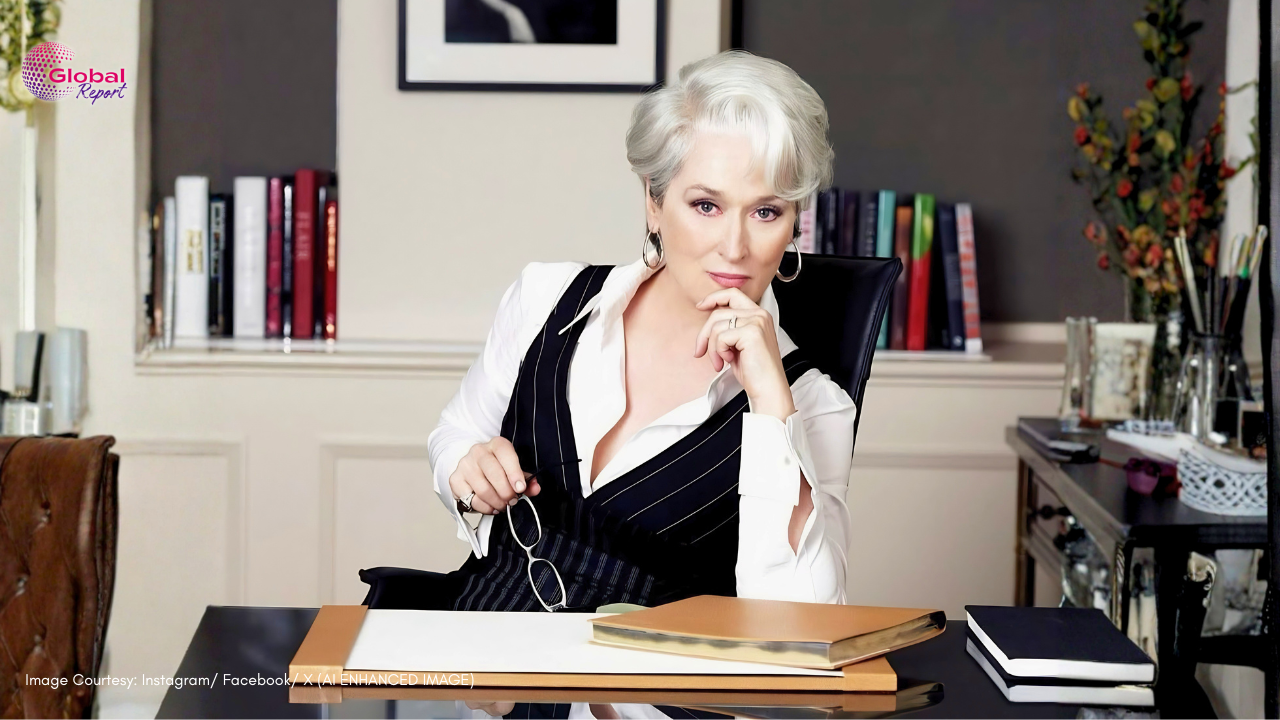
For those unfamiliar with the film, Miranda Priestly is the gravitational centre of The Devil Wears Prada. She runs Runway, a fictional high-end fashion magazine, with the kind of cold authority that needs no raised voice to be felt in every room she enters.
The character is widely understood to be inspired by Anna Wintour, editor-in-chief of American Vogue. But in Streep’s hands, Miranda became something distinct from any real-world reference — a figure of controlled menace and surprising complexity.
She speaks in soft commands. She dismisses people with a look. She is never cruel without purpose. What makes the performance remarkable is that Streep resists the temptation to play the character as a villain. Miranda Priestly is simply someone who operates at a level most people around her cannot reach — and she has stopped pretending otherwise.
The Academy noted the performance. Streep received an Oscar nomination for Best Actress — her 14th at the time — maintaining her record as the most-nominated performer in the history of the Academy Awards.
Before The Devil Wears Prada, Meryl Streep was one of the most critically respected actors in Hollywood history. After it, she became one of the most commercially reliable as well.
The film earned over $326 million at the global box office against a production budget of approximately $35 million. It was the kind of return that changes how studios categorise an actor — from prestige to proven mainstream draw.
The commercial momentum that followed was immediate. Mamma Mia! (2008) grossed over $609 million worldwide, a figure that surprised even its own producers. It’s Complicated (2009) followed with another strong performance, firmly establishing Streep as bankable outside the awards-season circuit.
Then came the third Oscar. In 2012, Streep won Best Actress for her portrayal of Margaret Thatcher in The Iron Lady, adding to earlier wins for Kramer vs. Kramer (1980) and Sophie’s Choice (1983). Her record of three wins remains unmatched among actors.
The throughline from the 2006 Prada negotiation to that 2012 Oscar is direct. Streep did not just secure better pay in one deal. She repositioned how the industry valued her for the decade that followed.
The Devil Wears Prada 2 arrives in 2026, two decades after the original. The sequel reunites Meryl Streep, Anne Hathaway, Emily Blunt, and Stanley Tucci — with Jenna Bush Hager making a brief cameo appearance, a detail that drew laughter during the Today interview.
For Streep, the sequel carries particular weight. It is her first live-action film performance in five years. Her last theatrical appearance was in The Prom (2020), meaning the return to Miranda Priestly also marks her re-entry into mainstream cinema after a significant gap.
Early reviews have emerged ahead of the wide release. Variety described the film as “breezily diverting fan service” — language that positions it as crowd-pleasing entertainment rather than an awards contender. Whether the sequel matches the cultural impact of the original remains an open question. But Meryl Streep’s presence alone ensures the film receives serious attention from critics and audiences in equal measure.
The casting backstory also invites an obvious parallel: was the decision to return to The Devil Wears Prada as straightforward as the first negotiation, or did the same salary logic apply two decades later? Streep has not addressed that question directly — but based on what she has shared publicly, it seems unlikely she returned on any terms other than her own.
Meryl Streep’s salary story is more instructive than it first appears. The most revealing detail is not that she doubled her ask — it is that she was 56 before she felt she had earned the right to do so.
That timeline reflects something systemic. Female actors — regardless of résumé, critical reputation, or box-office track record — consistently report internalising a sense that asking for more carries a risk that their male counterparts do not face in the same way. The fear of being perceived as difficult, of being replaced, of losing access to roles that were already hard-won, shapes how women negotiate long before any specific offer lands on the table.
Streep’s public willingness to name her age, name her fee, and frame it as a lesson she took too long to learn is a deliberate act of transparency. It normalises salary negotiation as a skill, not a personality flaw. And it reframes the common professional advice of “know your worth” with something more specific: know what the project needs that only you can provide.
Her accuracy in assessing her own position — the studio said yes without pushback — reinforces the wider point. The fear that holds people back from asking for more is, in many cases, not a reflection of reality. Streep tested the assumption. She was right. That is the real lesson of the Prada negotiation, and it travels far beyond the film industry.
Q: Why did Meryl Streep initially reject The Devil Wears Prada? A: Meryl Streep rejected the role when it was first offered because she believed the film would be a commercial hit. She wanted her salary to reflect that value, so she doubled her initial ask. When the studio agreed immediately, she signed on.
Q: How old was Meryl Streep when she filmed The Devil Wears Prada? A: Meryl Streep was 56 years old during the making of The Devil Wears Prada in 2006. She referenced her age directly when discussing how long it took her to feel confident enough to negotiate assertively for her market value.
Q: Did Meryl Streep win an Oscar for The Devil Wears Prada? A: She was nominated but did not win. The film earned Streep an Oscar nomination for Best Actress — her 14th at the time. Her third Oscar win came in 2012 for The Iron Lady, in which she played former British Prime Minister Margaret Thatcher.
Q: When is The Devil Wears Prada 2 coming out, and who is in it? A: The Devil Wears Prada 2 was released in 2026, marking the 20th anniversary of the original. The sequel reunites Meryl Streep, Anne Hathaway, Emily Blunt, and Stanley Tucci.
Q: Is The Devil Wears Prada 2 Meryl Streep’s first film in several years? A: Yes. The sequel is her first live-action theatrical film in five years. Her previous live-action appearance was in the 2020 film The Prom.
Every quiet, devastating line Miranda Priestly delivers on screen was performed by someone who had already decided, before a single frame was shot, exactly what that performance was worth.
With The Devil Wears Prada 2 now in theatres and Meryl Streep returning to the role that redefined her commercial career, the 20-year circle closes — on terms, it is safe to say, that she set herself.
Hashtags: #MerylStreep #DevilWearsPrada #DevilWearsPrada2 #MirandaPriestly #Hollywood