
 By
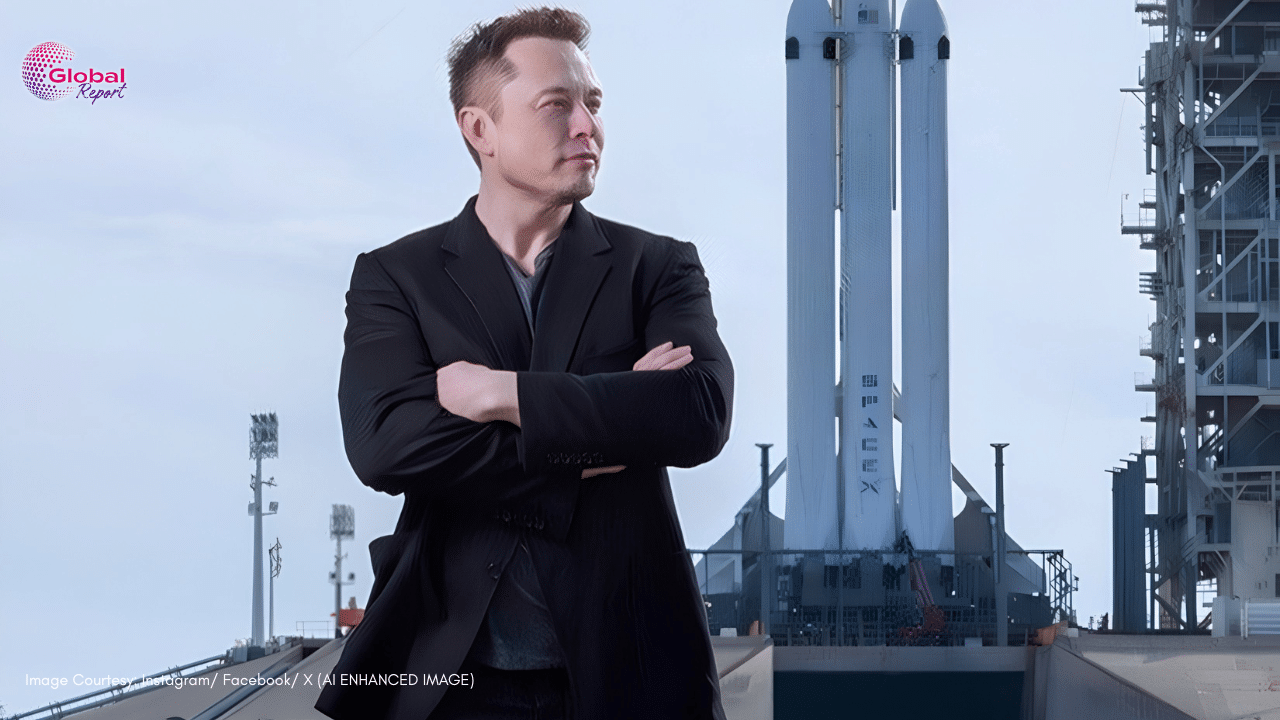
By Elon Musk has issued one of his starkest warnings yet about America’s financial future — and this time, the numbers backing him up are hard to ignore.
In a February 2026 appearance on the Dwarkesh Podcast, Musk stated that the United States is on a direct path to bankruptcy unless artificial intelligence and robotics dramatically boost the country’s productivity. He left no room for ambiguity in his assessment of the national debt crisis gripping America.
“We are 1,000% going to go bankrupt as a country and fail as a country, without AI and robots,” Musk said. “Nothing else will solve the national debt.”
The National Debt Crisis in Plain Numbers
The United States national debt now stands at $36.22 trillion and continues to climb. Federal spending consistently outpaces tax revenue, and the gap is widening each fiscal year.
According to the U.S. Treasury Department, the government has already spent approximately $1.17 trillion more than it collected in the first part of fiscal year 2026 alone. That is not an annual figure — it is a deficit that has accumulated in just a matter of months.
What makes Elon Musk’s warning particularly striking is the cost of simply maintaining that debt. Interest payments on the national debt have now surpassed $1 trillion per year — exceeding the entire U.S. military budget.
“The interest payments on national debt exceed the military budget, which is a trillion dollars. So we have over a trillion dollars just in interest payments,” Musk noted during the podcast.
That single data point reframes the debate. America is not just spending more than it earns. It is now borrowing money to pay interest on the money it already borrowed — a dynamic that economists describe as a debt spiral.
How Did America Get Here?
The roots of the current debt crisis stretch back decades. The U.S. has run a federal budget deficit in most years since the 1970s. The 2008 financial crisis triggered a wave of stimulus spending that pushed debt sharply higher. The COVID-19 pandemic in 2020 then added trillions more in emergency relief packages.
Historically, economists argued that low interest rates made high debt manageable. That assumption collapsed when the Federal Reserve raised interest rates aggressively starting in 2022 to fight inflation. Suddenly, the cost of carrying the debt ballooned. Congress continued spending, and the interest burden followed.
How the Iran War Is Making Things Worse
Military conflict has always carried an enormous financial cost, and the ongoing U.S. war with Iran is no exception.
The Pentagon confirmed that the United States spent approximately $11.3 billion in the first week of the Iran conflict alone. The war has now stretched to nearly two months, and public policy expert Linda Bilmes at the Harvard Kennedy School estimates the total cost could reach $1 trillion or more.
“The interest costs alone will add billions of dollars to the total cost of this war,” Bilmes noted. “And unlike the upfront costs, these are costs we are explicitly passing on to the next generation.”
That intergenerational transfer of debt is precisely what concerns fiscal watchdogs. War spending during the conflict generates immediate costs. But interest on that spending accumulates for years — sometimes decades — after the guns go silent.
The fiscal pressure does not stop there. The Trump administration submitted a proposed 2027 defense budget of $1.5 trillion — the largest single-year jump in military spending since the end of World War II, according to Reuters. The Committee for a Responsible Federal Budget estimates that defense spending alone could add $5 trillion to national expenditures through 2035. Once interest is factored in, the impact on America’s debt load could exceed $5.8 trillion.
Separately, the proposed One Big Beautiful Bill Act (OBBBA) carries its own staggering price tag. The same budget watchdog group estimates it will add $4.2 trillion to the national debt by fiscal year 2034 — or up to $4.7 trillion through 2035 when accounting for economic feedback effects.
What Elon Musk Says Can Save America
Musk’s warning came packaged with a specific prescription. He is not simply predicting collapse — he is pointing to artificial intelligence and robotics as the only viable path out.
His argument is grounded in economic logic. The national debt can only be managed through one of two approaches: dramatic cuts in spending, dramatic increases in revenue, or a combination of both. Musk believes AI and robotics can generate a productivity explosion that fundamentally transforms what is economically possible for America.
If AI dramatically increases per-worker output, it could boost GDP, expand the tax base, and generate revenue without raising tax rates. Robots taking on labor-intensive tasks could lower costs across healthcare, manufacturing, and government services — sectors that currently drive significant federal spending.
Musk has championed this vision through his own companies. Tesla is advancing autonomous vehicle and robotics technology. His AI venture, xAI, is developing large-scale AI systems. He sees these not merely as business opportunities but as essential tools for national economic survival.
Without that productivity breakthrough, Musk’s assessment is blunt: America is “actually totally screwed because the national debt is piling up like crazy.”
Other Financial Giants Sounding the Alarm
Elon Musk is not a lone voice on this issue. Some of the most respected names in global finance share his concern about America’s debt trajectory — even if they disagree on the precise outcome.
Ray Dalio, the founder of Bridgewater Associates — the world’s largest hedge fund — has warned that the U.S. is heading toward what he calls a “debt death spiral.” In his framework, the government eventually reaches a point where it must borrow simply to pay the interest on its existing debt, with no exit in sight.
Dalio’s predicted outcome differs from Musk’s, however. He does not foresee a formal national bankruptcy.
“There won’t be a default — the central bank will come in and we’ll print the money and buy it,” Dalio said. “And that’s where there’s the depreciation of money.”
The two scenarios — outright bankruptcy versus currency depreciation — share the same underlying problem. Both destroy purchasing power. One does so through default; the other does so through inflation.
The Federal Reserve Bank of Minneapolis offers a sobering data point on this front. According to its inflation calculator, $100 in 2025 had the same purchasing power as just $12.06 in 1970. Over five decades, the dollar lost nearly 88% of its value. Musk has warned explicitly that if current debt trends continue, “the dollar’s going to be worth nothing.”
What This Means for Everyday Americans
For most Americans, trillion-dollar figures feel abstract. But the consequences of the debt crisis are already showing up in daily life.
Higher interest rates — partly a response to inflation driven by excess spending — have pushed mortgage rates sharply higher, pricing millions of Americans out of homeownership. Credit card interest rates are near record highs. The cost of carrying any debt, whether a car loan or a small business line of credit, has climbed substantially.
If the national debt continues to grow unchecked, the choices available to policymakers narrow. Higher taxes, cuts to Social Security and Medicare, or both become unavoidable options. Economists warn that a scenario where the government must choose between paying interest on its debt and funding essential services is not hypothetical — it is a mathematical eventuality without course correction.
Younger Americans bear the heaviest long-term burden. Debt accumulated today means fewer resources for future generations, higher taxes during their working years, and less fiscal flexibility to respond to future crises — whether economic downturns, pandemics, or national security threats.
How Investors Are Protecting Their Wealth
With rising debt, currency risk, and geopolitical uncertainty as the backdrop, many experienced investors are repositioning their portfolios toward assets that historically hold value during periods of fiscal stress.
Ray Dalio has specifically highlighted gold as an underutilized hedge. According to him, most investors do not hold nearly enough of it. Gold cannot be printed by a central bank. It carries no counterparty risk. And it has historically performed well during periods of inflation and currency weakness.
Gold prices have climbed nearly 51% over the past 12 months, reflecting rising demand from investors seeking protection against currency debasement. JPMorgan CEO Jamie Dimon has suggested gold could reach $10,000 per ounce in the current environment.
Real estate represents another traditional inflation hedge. When consumer prices rise, property values and rental income often follow. The S&P Cotality Case-Shiller U.S. National Home Price Index has increased more than 87% over the past decade.
Diversification across asset classes — including alternatives with low correlation to equities — is a strategy that sophisticated investors have long deployed. With the S&P 500’s ten largest stocks now representing nearly 40% of the index’s total weight, and valuation ratios at levels not seen since the dot-com era, concentration risk is a growing concern for investors of all sizes.
Frequently Asked Questions
Q: Why does Elon Musk say America will go bankrupt? A: Musk argues that America’s national debt is growing faster than the economy can sustain. Interest payments alone now exceed $1 trillion per year — more than the entire military budget. Without a major productivity breakthrough driven by AI and robotics, he sees no realistic path to fiscal balance.
Q: How much is America’s national debt right now? A: The U.S. national debt currently stands at approximately $36.22 trillion. In just the first portion of fiscal year 2026, the federal government ran a deficit of roughly $1.17 trillion — spending far more than it collected in taxes and other revenues.
Q: Does Elon Musk’s warning mean the U.S. dollar will collapse? A: Musk has warned the dollar could lose significant value if debt trends continue unchecked. Ray Dalio agrees that currency depreciation is a real risk, though he does not predict a formal default. He expects the Federal Reserve would print money to cover obligations, which erodes purchasing power over time rather than triggering an outright default.
Q: What assets do experts recommend to protect against national debt risk? A: Ray Dalio specifically recommends gold as a portfolio diversifier during periods of fiscal stress. Real estate has also historically served as an inflation hedge. Diversified portfolios that include alternatives with low correlation to equities are a common strategy among institutional investors preparing for prolonged fiscal uncertainty.
Q: How does the Iran war affect the national debt? A: The Pentagon estimates the first week of the Iran conflict cost $11.3 billion. Public policy experts project the total war cost could exceed $1 trillion. Beyond the direct spending, interest on war-related borrowing will continue accumulating for years, passing a significant portion of the cost onto future generations.
Elon Musk’s warning about America’s financial trajectory is extreme in its language but grounded in measurable data. The national debt is real. The interest burden is real. The fiscal math — without significant change — does not work.
Whether the solution ultimately comes from AI-driven productivity gains, policy reform, or some combination of both remains to be seen. What is clear is that the debate over America’s debt is no longer confined to economists and policymakers. It has reached one of the most prominent entrepreneurs in the world — and his assessment is that the window for course correction is closing.
Stay informed about how fiscal policy developments may affect your financial decisions, and consider speaking with a financial adviser about positioning your portfolio for a high-debt, high-uncertainty environment.
Hashtags: #ElonMusk #NationalDebt #AmericaEconomy #USDebt #FiscalCrisis