 By
By Donald Trump‘s proposed triumphal arch in Washington, D.C., is already generating fierce opposition — and construction hasn’t even begun. Critics include architects, veterans, and even the very expert who originally inspired the project.
What Is Trump’s Triumphal Arch Plan?
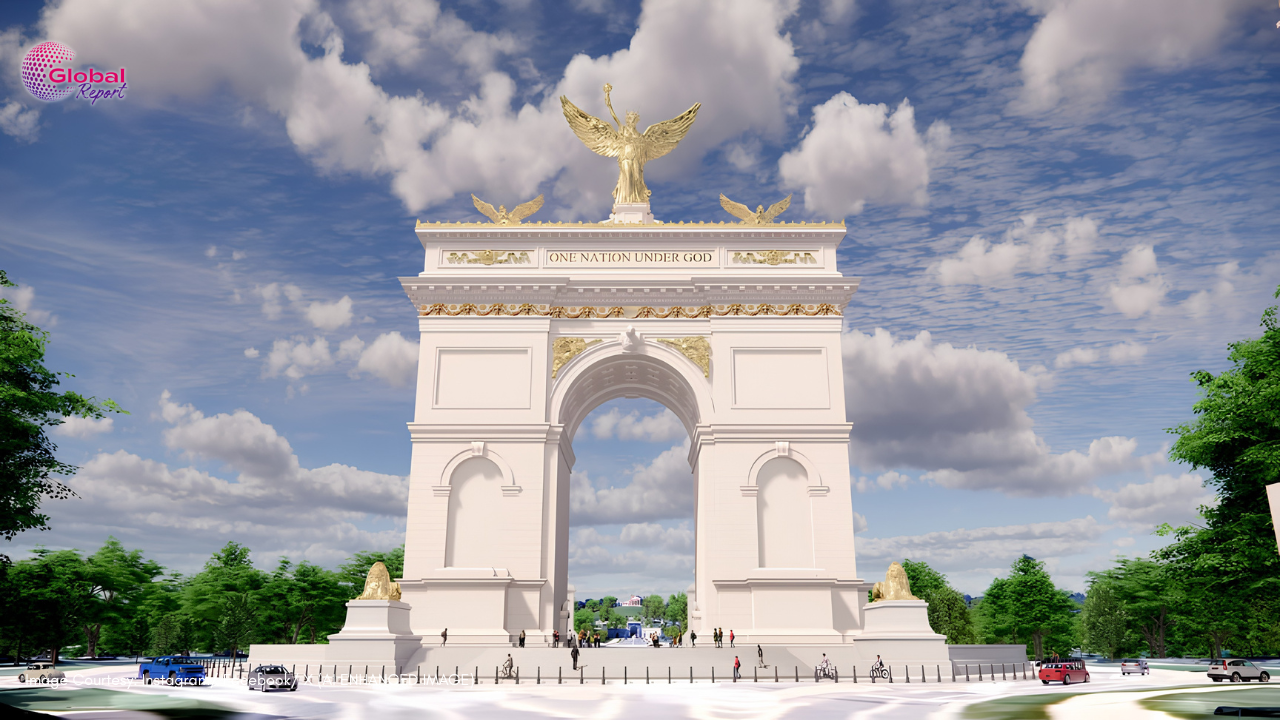
President Donald Trump has proposed building a massive triumphal arch in Washington, D.C., as part of America’s 250th birthday celebrations. The structure would be one of the largest of its kind in the world — towering at 250 feet tall.
The project is being designed to serve as a permanent landmark. It would be located near Arlington Cemetery, one of the most historically significant sites in the United States.
The Commission of Fine Arts is scheduled to formally review the proposal. The outcome of that review could determine whether the project moves forward on its planned timeline.
How the Arch Grew From 60 Feet to 250 Feet
The original proposal was for a modest 60-foot arch — a structure that could be completed by July 4, 2026. That plan was quickly abandoned as the president’s ambitions expanded.
The size was first upscaled to 76 feet, a deliberate nod to the year 1776 and America’s founding. But the design continued to grow, eventually reaching the current target of 250 feet.
Trump has framed the 250-foot height as symbolic — a celebration of America’s 250th year. Critics argue the rapid and dramatic scale changes reflect poor planning and raise serious questions about costs and feasibility.
The Expert Who Changed His Mind
Architecture critic Catesby Leigh had previously argued that Washington was the only major Western capital without a monumental arch — a point that helped build the case for the project. The architect currently designing the monument had also helped conduct research for papers Leigh wrote that originally encouraged the project.
But Leigh has since reversed his position. The dramatic size increase was the turning point.
“I was proposing a celebratory project,” Leigh said, according to a New York Times report. “An arch of not titanic dimensions; an arch that could be built by July 4, 2026. And if the arch were considered to be of enduring value in its design, then it could be rebuilt in permanent form.”
His vision was a temporary, human-scaled structure that could later become permanent if it proved worthy. What Trump is now proposing bears little resemblance to that original concept.
Leigh’s public criticism carries unusual weight. He is not an opponent of the idea in principle — he actively pushed for it. His reversal signals that even supporters of a Washington arch believe this version has gone too far.
Washington Arch vs. Arc de Triomphe: Trump’s Bold Comparison
Donald Trump has been explicit about his ambitions for the structure. He wants it to surpass the Arc de Triomphe in Paris — one of the most iconic monuments in the world.
“The one that people know mostly is the Arc de Triomphe in Paris, France, and we’re going to top it by, I think, a lot,” Trump said in December. “The only thing they have is history.”
The Paris arch was built to commemorate Armistice Day, marking the end of World War I. It stands approximately 164 feet tall and took 30 years to complete. Trump’s arch is planned at 250 feet, with a target completion date before he leaves office.
Architectural historians note that triumphal arches in Western tradition are typically built to honor specific military victories or national sacrifices. The purpose and symbolism of Trump’s arch remain subjects of debate.
Vietnam Veterans File Lawsuit to Block the Project
The backlash has moved beyond public opinion and into the courtroom. Vietnam War veterans have filed a lawsuit specifically to stop the Washington Arch from being built.
Their central objection is the arch’s planned location near Arlington Cemetery. The veterans argue the structure would obstruct the view from Arlington to the Lincoln Memorial.
That sightline is considered historically and symbolically significant. For many veterans and families of the fallen, the unobstructed view connects America’s war dead to one of its most powerful symbols of unity and perseverance.
The legal challenge adds a layer of complexity to an already contentious project. Courts may need to weigh in before ground is ever broken.
Who Is Paying for the Washington Arch?
Funding for the project is a mix of private donations and potential public money. Trump has stated that private contributions will cover a significant portion of the cost.
The National Endowment for the Humanities has reportedly set aside $15 million for Trump’s potential arch. That figure represents public funds being directed toward a project still under review and facing active legal opposition.
The full cost of a 250-foot permanent monument has not been publicly disclosed. Given the scale involved, critics expect the final price tag to far exceed current estimates.
What Happens Next?
The Commission of Fine Arts is the next major institutional hurdle. Its review could result in approval, modification requests, or outright rejection of the current design.
The project is slated to break ground this summer, with completion targeted before the president leaves office. That compressed timeline has raised further doubts among architects and urban planners about whether a structure of this scale can be responsibly executed at such speed.
Donald Trump’s Washington Arch has become a flashpoint in broader debates about public monuments, presidential legacy, and the use of public land and funds. As legal challenges mount and criticism grows from unexpected corners, the road ahead for this project remains far from clear.
Whether the arch ultimately stands or is stopped, it has already become one of the most controversial infrastructure proposals of the Trump presidency.
Follow the latest developments on Trump’s Washington Arch — bookmark this page for updates as the Commission of Fine Arts delivers its decision.