 By
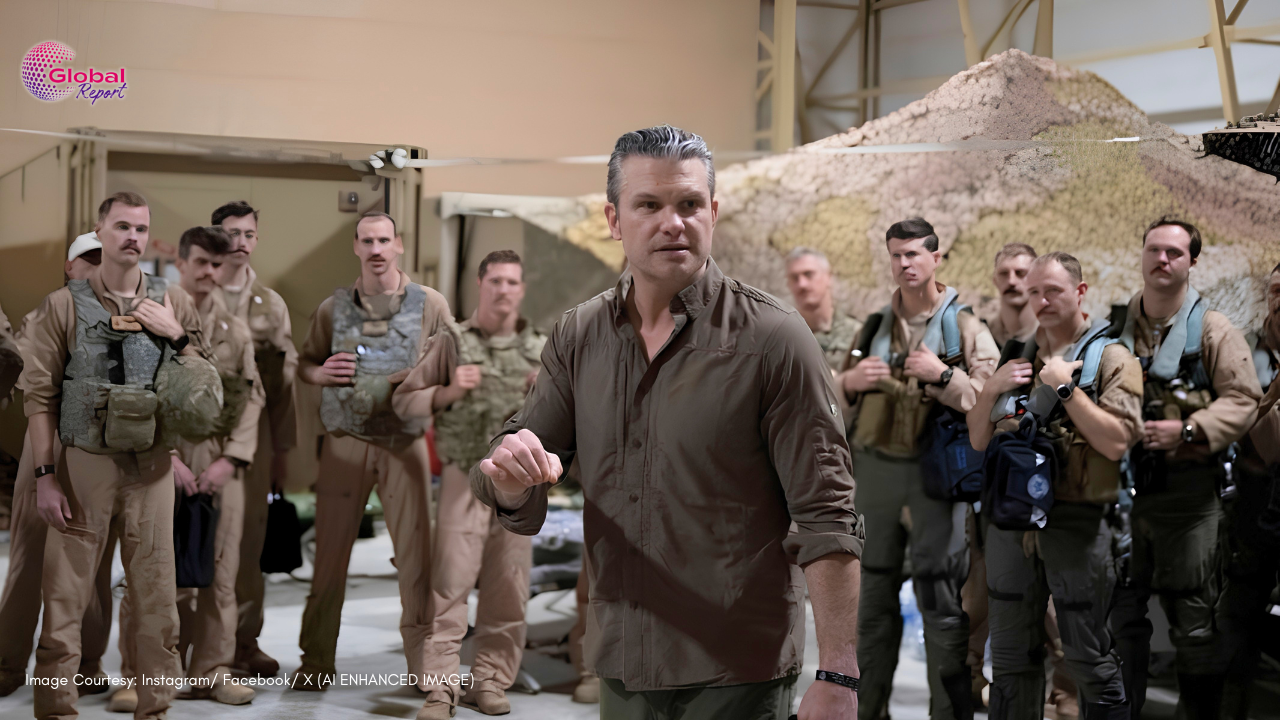
By Defense Secretary Pete Hegseth delivered a sharp and direct message to Iran’s military leadership on Thursday, warning that the United States is fully prepared to strike the country’s energy infrastructure if Tehran fails to reach a peace deal. Speaking at a Pentagon press briefing, Hegseth told Iranian commanders to “choose wisely” — and left little doubt about what the wrong choice would cost.
The statement comes amid a rapidly escalating standoff between Washington and Tehran, with nuclear talks collapsed, a US naval blockade now in force, and both sides exchanging hardened positions.
Hegseth Takes the Podium
Pete Hegseth appeared alongside Chairman of the Joint Chiefs of Staff Gen. Dan Caine and US Central Command Commander Adm. Brad Cooper at Thursday’s briefing. Cooper had recently returned from the front lines. The assembled senior brass underscored the gravity of the moment.
Hegseth’s message was not diplomatic in tone. It was a military address directed squarely at Iran’s armed forces — and it was built around a simple premise: the United States has capabilities Iran cannot match, and Washington knows exactly where Tehran’s assets are.
“We’re watching you,” Hegseth said. “Our capabilities are not the same, our military and yours. Remember, this is not a fair fight.”
The 5 Critical Warnings Delivered to Iran
1. “We Know What You’re Moving — and Where”
Hegseth told Iranian commanders the US military is tracking every movement of their remaining assets. He described Iran as “digging out of bombed out and devastated facilities” with no real ability to recover at speed. The implication: Tehran has lost the element of surprise.
2. “You Cannot Rebuild. We Can.”
The defense secretary drew a stark contrast in industrial capacity. Iran, he argued, has no functioning defense industry capable of replenishing offensive or defensive capabilities. The US, by contrast, is “reloading with more power than ever before.” This warning targeted Iranian morale directly.
3. “We Have Better Intelligence Than Ever Before”
Hegseth stressed that the US now holds a significant intelligence edge — describing it as “even more importantly, better intelligence than ever before.” The message: Iran cannot outmaneuver what it cannot hide from.
4. “We Are Locked and Loaded on Your Energy Infrastructure”
Perhaps the sharpest warning of all. Hegseth stated the US military is “locked and loaded” on Iran’s critical dual-use infrastructure, remaining power generation, and energy industry yahoo — ready to strike “at the push of a button.” The phrase “dual-use infrastructure” is significant, referring to facilities that serve both civilian and military functions.
5. “If Iran Chooses Poorly — Blockade and Bombs”
Hegseth spelled out the consequences in plain language: “If Iran chooses poorly, they will have a blockade and bombs dropping on infrastructure, power and energy.” No ambiguity, no diplomatic softening. The US position, as presented Thursday, is binary — deal or escalation.
Background: How US-Iran Talks Fell Apart
The context behind Hegseth’s warnings is a diplomatic process that has been deteriorating for weeks. The US and Iran held 21 hours of direct negotiations in Islamabad — the highest-level face-to-face engagement between Washington and Tehran since the 1979 Islamic Revolution. The talks ended without an agreement on April 12.
Vice President JD Vance, who served as Washington’s lead negotiator, said at a press conference: “The bad news is that we have not reached an agreement. And I think that’s bad news for Iran much more than it’s bad news for the US… They have chosen not to accept our terms.”
The core sticking point was nuclear. Trump wrote on Truth Social that “the meeting went well, most points were agreed to, but the only point that really mattered, NUCLEAR, was not.”
The US proposal had included an end to Iran’s nuclear program, limits on its missiles, reopening of the Strait of Hormuz, restrictions on Iran’s support for armed groups, and sanctions relief for Iran. Iran rejected it and issued a counter-proposal the US in turn rejected.
The Naval Blockade Explained
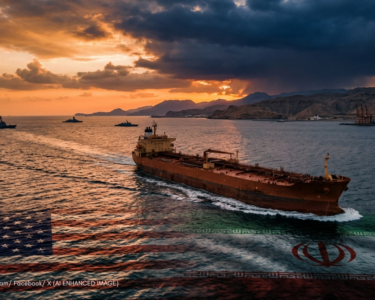
Following the breakdown in talks, President Trump moved quickly. Trump announced that “effective immediately, the United States Navy will begin the process of blockading any and all ships trying to enter, or leave, the Strait of Hormuz.”
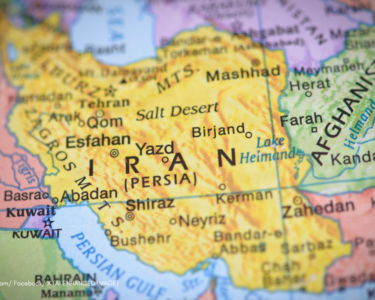
The Strait of Hormuz is a narrow waterway through which roughly a fifth of the world’s oil trade passes. Iran had militarized it and was charging toll fees on vessels passing through — a key point of leverage Tehran was unwilling to surrender.
The continued disruptions have led to surging oil and gas prices globally, as well as supply bottlenecks affecting fertilizer and other goods, which the UN’s food and agriculture agency warned could lead to a global food catastrophe.
Adm. Cooper, present at Thursday’s briefing alongside Hegseth, is now tasked with maintaining what the Pentagon described as an “ironclad blockade” while keeping US forces postured to restart combat operations if Iran rejects a deal.
Iran’s Response and Red Lines
Tehran has not taken the escalation quietly. Iran’s Islamic Revolutionary Guard Corps declared that any encroachment of US military vessels upon the Strait of Hormuz would constitute a ceasefire violation. Iran also declared the blockade an act of “piracy” and placed the country on maximum combat alert.
Iran’s parliamentary speaker Mohammad Bagher Ghalibaf, who led the Islamabad delegation, cited a lack of trust as the core barrier: “Due to the experiences of the previous two wars, we have no trust in the other side.”
Iran’s foreign minister Abbas Araghchi offered a different version of events, claiming the two sides were “inches away” from agreement before the US imposed what he called “maximalism” and a blockade. Iran’s parliament spokesman Ebrahim Rezaei stated that Iran will not agree to extend the ceasefire if it does not include Iranian control of the Strait of Hormuz.
The gap between the two sides is not merely tactical. Washington’s 15-point proposal reportedly demanded a 20-year moratorium on enrichment, ballistic missile suspension, reopening of Hormuz, recognition of Israel’s right to exist, and an end to Iran’s support for regional proxy networks including Hezbollah, the Houthis, and Hamas. Iran’s counter-demands included war reparations and international recognition of its sovereignty over Hormuz. These are not positions easily bridged.
What Happens Next
Despite the collapse of the Islamabad talks, a second round is reportedly under consideration. Trump told reporters that Iran had called the US, saying “they’d like to make a deal very badly.” Time US and Iranian teams were reported to be returning to Islamabad for further discussions.
On April 15, Trump said he wants the war with Iran to end swiftly — however, White House deputy chief of staff Stephen Miller stated that Trump holds a hard red line against allowing Iran to develop nuclear weapons and will use force if necessary to enforce it.
Pete Hegseth’s Thursday briefing reinforces that military option. By presenting precise details on target categories — energy infrastructure, power generation, dual-use facilities — the Pentagon is signaling to Tehran that the US strike plan is not theoretical. It is developed, operational, and waiting only on a presidential order.
The next few days of diplomacy will determine whether Hegseth’s warning is the prelude to a deal or the final word before a new military phase begins.
Stay informed on the latest US-Iran developments — bookmark this page and follow our coverage for real-time updates as negotiations continue.